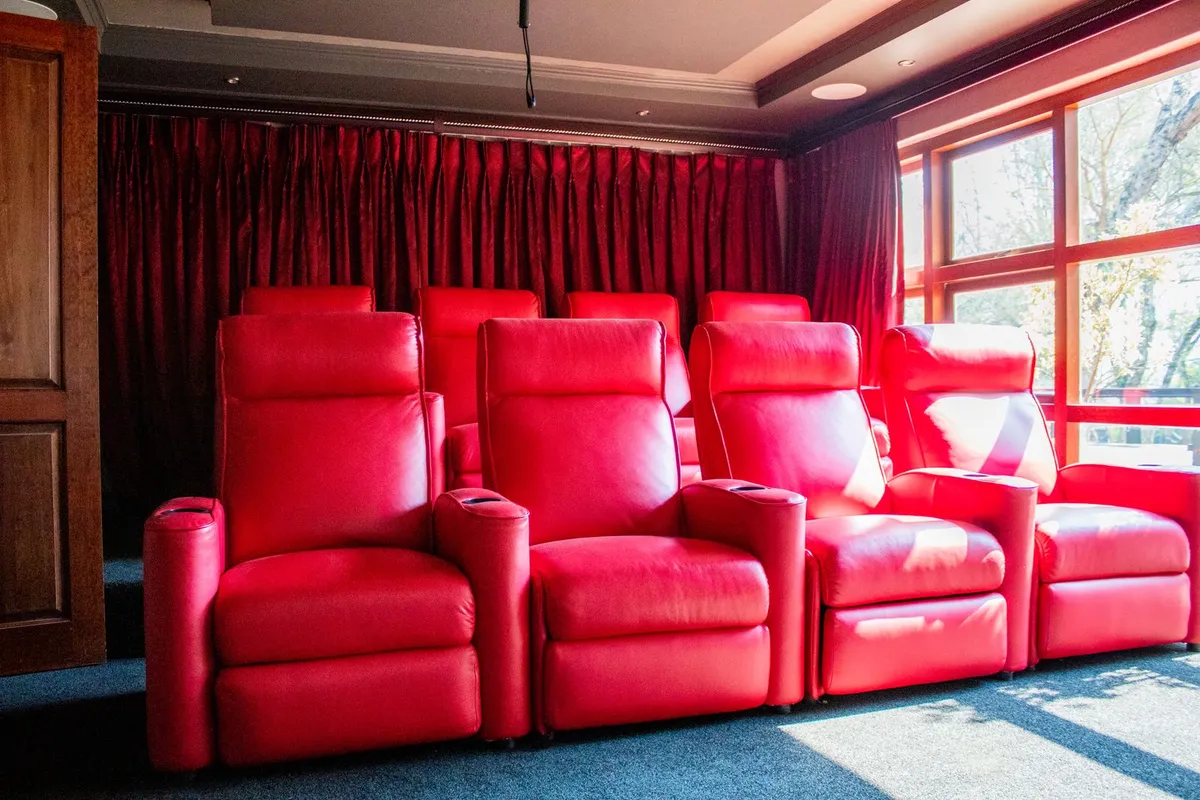
A recliner asks two questions a plain armchair never does — does it fold flat enough to clear your doorway, and is any part of it actually electrical? Answering both before anyone tries to lift it is what separates an easy collection from one that stalls in a hallway. This guide covers what actually decides how a recliner leaves a Dubai apartment, from checking the mechanism to what happens to it afterwards. It is booked as an ordinary furniture removal in Dubai, with one extra question about the motor.
A recliner is two furniture jobs in one
Treat a recliner as one item and the collection usually goes wrong somewhere. The frame and upholstery are a large, heavy, two-person piece exactly like a sofa or an armchair — nothing about the seating itself is unusual. What changes everything is the mechanism underneath it, because a manual recliner is still purely furniture, while a powered one genuinely has an electrical component built into a piece that looks, from the outside, exactly the same.
That distinction decides how the item is booked, how it is carried, and what happens to it once it is collected. Get it right at the point of booking and the rest of this guide is mostly confirmation. Get it wrong and you find out the hard way, halfway down a stairwell.
Manual or powered — check before anyone lifts it
A manual recliner works off a spring-loaded lever or a strap on the side, and the whole mechanism is purely mechanical — cables, springs and a steel frame, nothing that plugs in. It is furniture from end to end, and it is handled exactly like the frame of any other large upholstered chair.
A powered recliner has a motor and a small transformer box, usually fixed underneath the seat or built into the base, along with a control lead running to a handset or a panel on the arm. That motor and transformer are electrical waste rather than furniture, and they are separated out and routed differently once the piece is collected — the same rule that already applies to a motorised bed base or a lift-up storage bed.
- Look under the seat cushion and along the base for a black plastic box the size of a small brick — that is the transformer, and its presence means the chair is powered.
- Check for a cable running to a wall socket, and a handset or button panel on the arm rather than a pull lever or strap.
- If you genuinely can't tell, say so when you book rather than guessing — a crew that expects plain furniture and finds a live cable loses time working it out on the day.
Unplug it and secure the cable before anyone moves it
A powered recliner should be unplugged before it is touched, not while someone is halfway through lifting it. Coil the cable and tuck it against the base or tape it flat, because a loose cable under a moving item is both a trip hazard and something that can catch on a door frame or a stair edge on the way out.
If the recliner has a battery backup rather than relying purely on the mains — some do, to let the footrest release manually during a power cut — mention that at booking too. It changes nothing about how the frame is carried, but it is exactly the kind of detail a crew would rather hear in advance than discover underneath a cushion.
Lock the footrest before it leaves the room
A reclined chair and a folded one are two different shapes, and the difference is bigger than it looks from a seated position. With the footrest up and the back dropped, a recliner's depth grows substantially — enough to turn a doorway or a stairwell corner that would easily take the folded chair into one it doesn't fit at all.
Fold the footrest down and lock the backrest upright before anyone tries to move it, and check that the lock actually holds rather than assuming it does — a mechanism that has been sat in for years doesn't always latch as firmly as it once did. If the footrest genuinely won't close, whether from a seized cable or a broken catch, that is a real reason people get rid of a recliner in the first place, and it is worth mentioning at booking, because a chair stuck half-open needs more care and sometimes an extra pair of hands to travel safely.
The weight sits at the back, not evenly across the frame
An ordinary armchair is roughly balanced between its two carriers. A recliner isn't, because the steel mechanism, the springs and — on a powered model — the motor and transformer are all concentrated in the base and the back of the frame rather than spread through it. Whoever carries the back end of a recliner is carrying noticeably more than whoever has the front, and it's worth saying so out loud before the lift starts rather than discovering it on the stairs.
This is also why a recliner is rarely a one-person job, even though its overall size can look similar to a large armchair someone might be tempted to shift alone. The weight is real, and it's concentrated exactly where a solo lifter has the least control.
Measure the folded footprint, not the reclined one
Measure a recliner the way you would measure any large piece of furniture — width, depth and height, at the doorway, the lift car and the tightest turn on the route out — but measure it folded, closed and upright, because that is the shape it will actually travel in. Measuring it mid-recline tells you nothing useful about whether it clears a doorway on the way out.
If the chair swivels or rocks on its base, check whether that base detaches or has to travel with the seat. Some do, some don't, and it changes the shape you're actually trying to fit through a corridor.
Selling or giving away a used recliner
A recliner is slower to place than an equivalent plain armchair, and it's worth setting that expectation honestly rather than hoping otherwise. A buyer for a normal chair is judging fabric and style. A buyer for a recliner wants to test that the mechanism actually works before committing to moving something this size, which narrows the pool to people willing to view it in person rather than buy from a photograph alone.
State the mechanism's condition plainly in any listing — manual or powered, and whether it currently reclines smoothly, sticks, or doesn't work at all. A recliner sold as-is with a known fault still finds a buyer more often than one where the fault is discovered at the door, because that version costs someone a wasted trip and ends the conversation immediately.
What happens to a recliner that's collected
Once collected, a recliner is separated the same way any large upholstered item is: the frame and any solid timber or board go one way, the steel mechanism and fittings go with metal, and the foam and fabric are handled as general waste, since neither recycles in any practical household sense. On a powered model, the motor, transformer and cable are pulled out and routed as electrical waste rather than travelling with the rest of the frame.
None of that changes what you actually need to do before it leaves your home — unplug it if it's powered, fold and lock the footrest, and measure it closed. Get those three right and the rest of the collection is straightforward, whatever happens to the pieces afterwards.