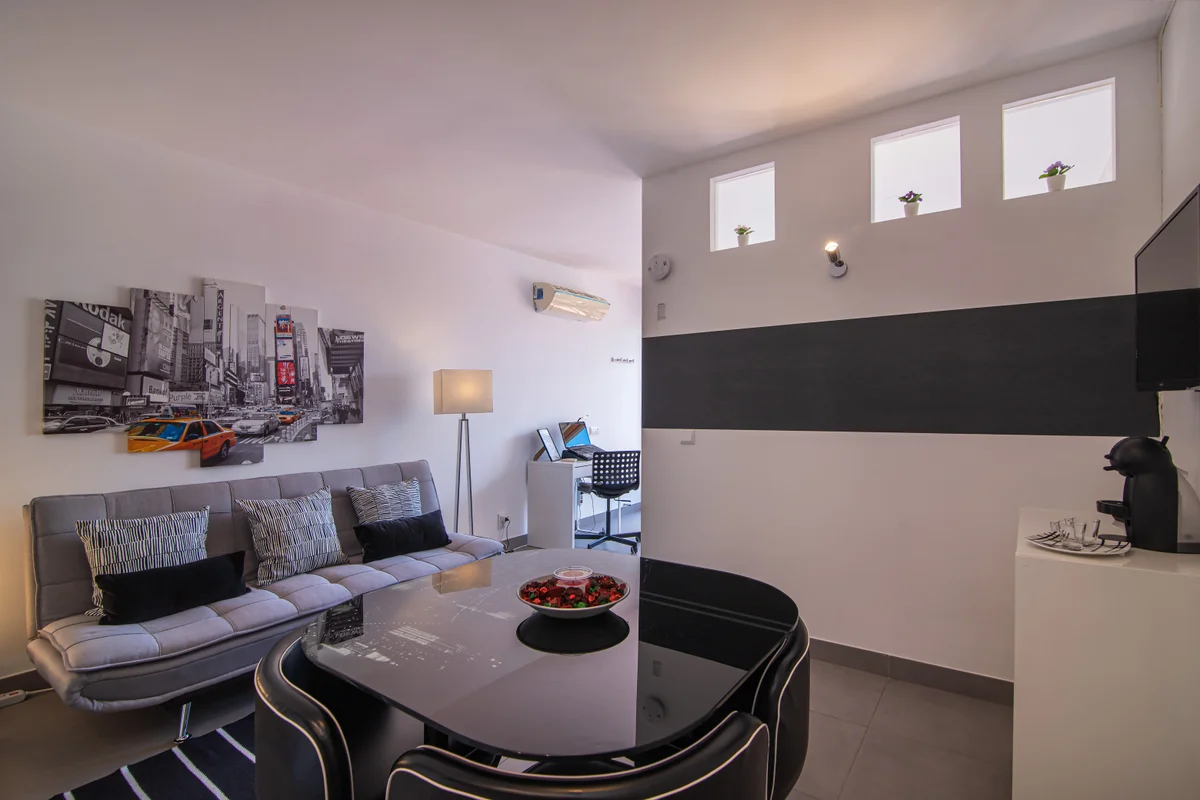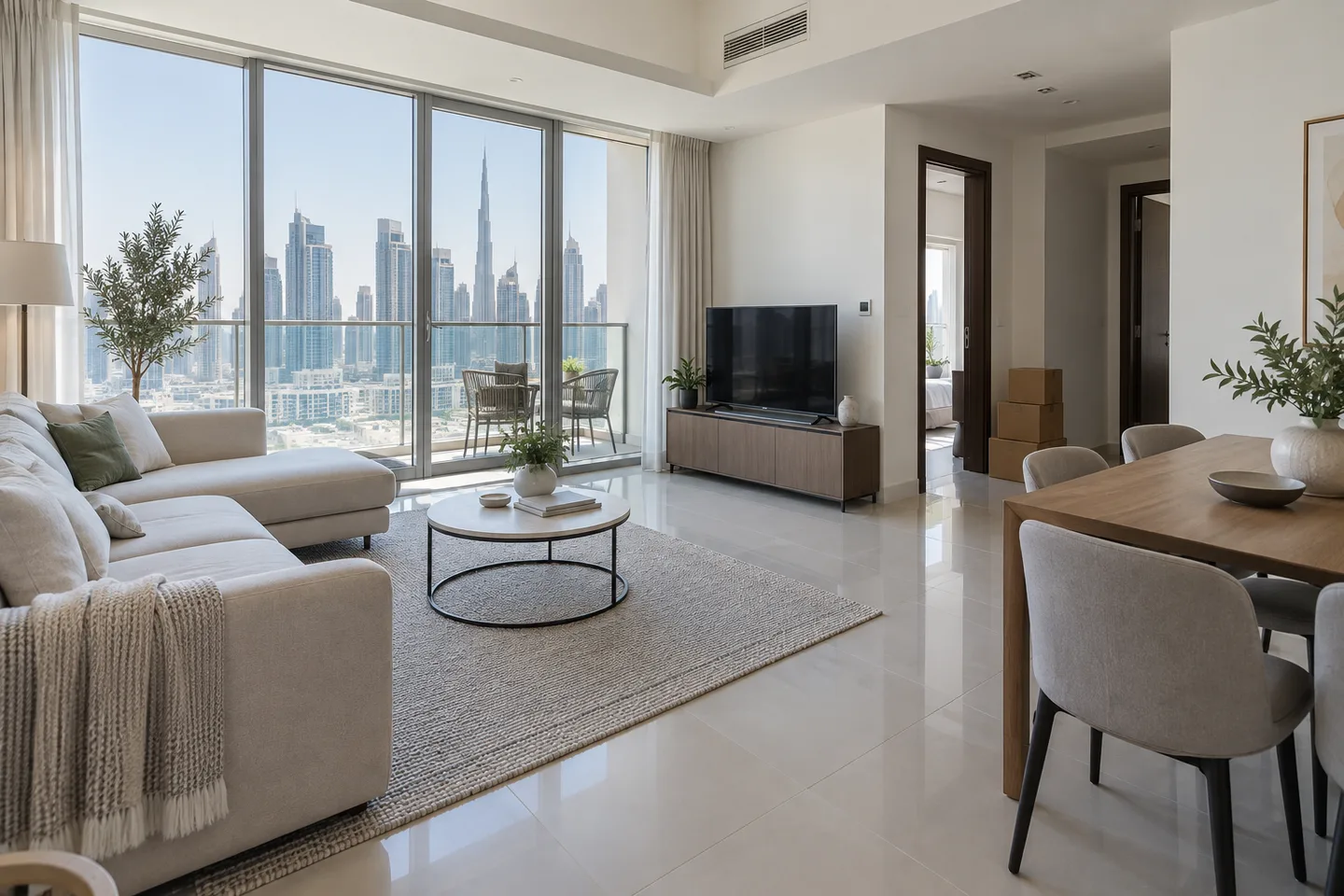
A home ready for sale photographs is not necessarily ready to hand over to its buyer. You may want the living room uncluttered for viewings while still using the beds and kitchen every day. Property clearance before sale in Dubai works best when you distinguish the items leaving before marketing from those leaving at the agreed final handover.
Which stage of the sale are you clearing for?
Decide whether the immediate job is to make the property easier to view or to remove the final contents. These can be separate collections, with different lists and different deadlines. An occupied apartment usually needs a more selective first pass than a vacant villa whose owner has already moved out.
- Before photography: remove agreed surplus that obscures rooms, blocks doors or prevents access to the spaces being shown.
- During viewings: retain the household items still in use and keep any furniture intended to remain with the sale clearly identified.
- Before final handover: remove the remaining items that are outside the agreed inclusions and check spaces not shown in the listing photos.
Discuss the presentation plan with your selling agent before booking an entire house to be emptied. Some retained furniture may help show how a room is used; in another property it may simply be surplus. Clearance is a practical service, not a guarantee of a quicker sale or a higher offer.
Confirm which contents are staying with the sale
Create a keep list before making the remove list. It should identify the furniture, appliances and loose accessories intended to remain, using descriptions that match the actual objects. If the buyer and seller have not settled an item’s inclusion, mark it as undecided rather than asking the crew to infer the answer.
“Kitchen contents included” is too broad for a clearance brief. A built-in oven, a freestanding fridge and the cookware inside the cupboards may all have different destinations. Ask the people handling the sale to clarify the agreed inclusions; a collector should not interpret a sale contract or decide whether a fitting belongs in it.
Keep the inventory current if the agreement changes after photographs have been taken. A sofa that was originally available for disposal might later be included with the property. Update the crew’s list and images before the final visit, and keep keys, remotes and removable appliance parts with anything that stays.
Make the rooms accessible for viewings
Clear the surplus that prevents a visitor from walking through a room, opening a cupboard or seeing the usable floor area. That does not require emptying every lived-in space. Start with the blocked route or overcrowded corner rather than removing useful furniture merely because it is large.
Do not relocate the unwanted load into another room just to remove it from the photographs. The spare bedroom, balcony or parking-space store may be viewed too, and the same load will still need carrying out later. If an item is waiting for collection, give it an agreed temporary position that does not obstruct access.
Once furniture moves, previously hidden marks or maintenance needs may become visible. Leave time for the appropriate follow-up and communicate what has been uncovered. Clearance should make the property easier to inspect, not provide a way of concealing its condition behind a different arrangement of furniture.
Include the spaces the listing photographs leave out
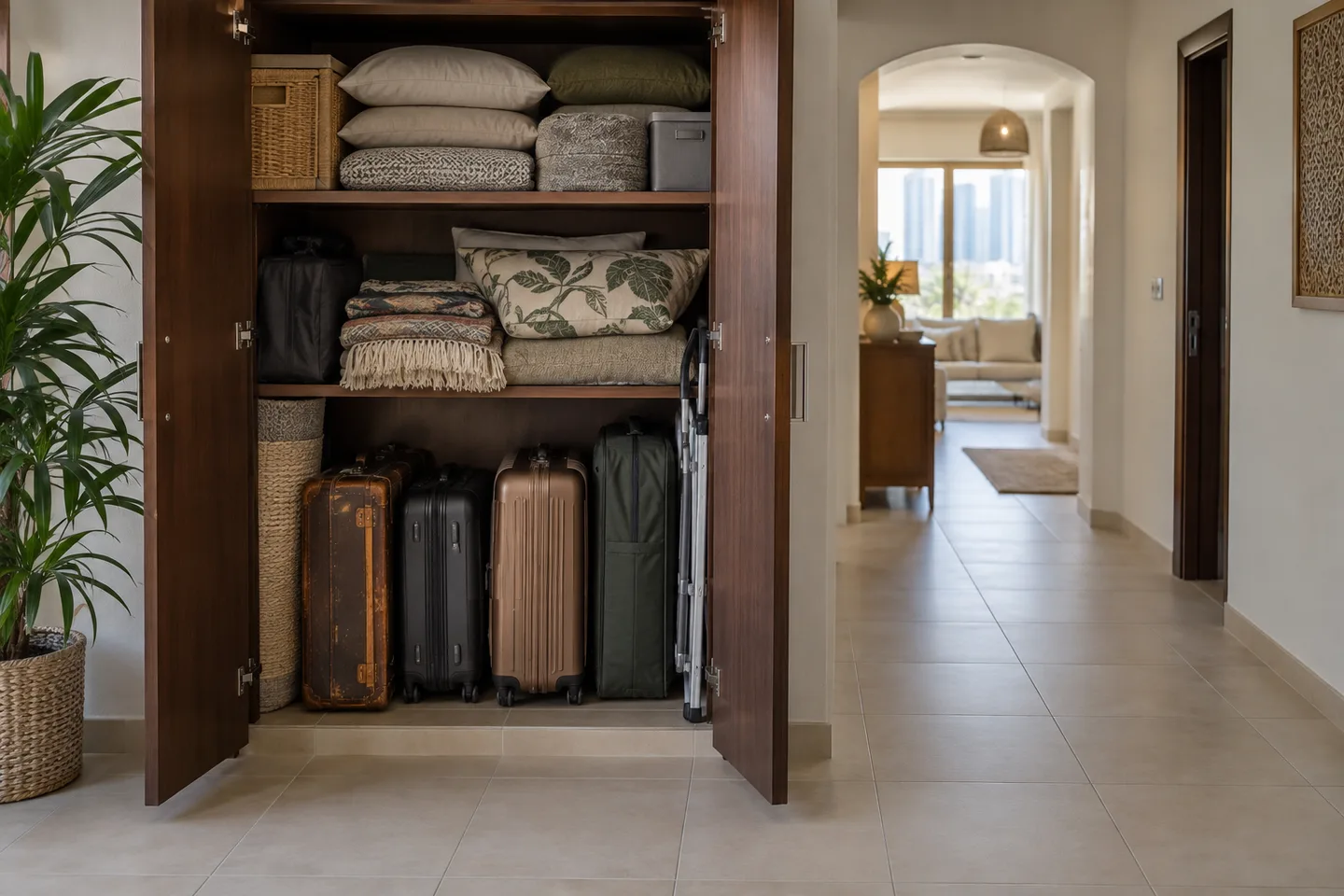
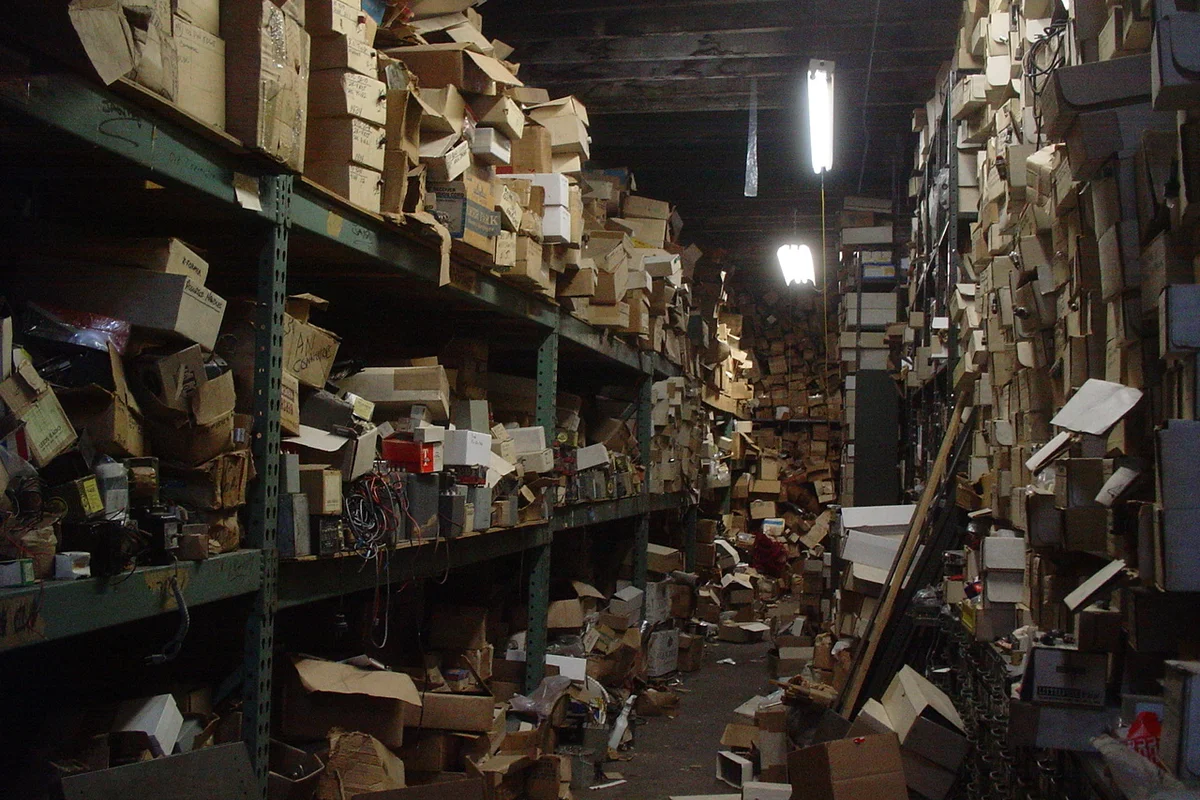
Open the storage areas before requesting a whole-property quote. A room can look nearly empty while a deep cupboard holds several trips’ worth of contents. Walk the actual property rather than using the marketing photographs as a substitute for a clearance survey.
- Check above and behind items inside fitted cupboards, including high shelves reached safely.
- Include the utility area and any separate storage space associated with the apartment.
- For a villa, account for the garage, outdoor store and garden items that are genuinely within the agreed clearance.
- Identify boxes stored on behalf of another person so they do not become part of the owner’s disposal load by assumption.
Describe any area you cannot inspect instead of guessing its contents. The collector can qualify the estimate or arrange a closer assessment. Finding that space after the truck is booked can change both the load and the time needed to finish.
Book around confirmed milestones, not an expected offer
Use the date of the photo visit for the first collection and the agreed handover arrangements for the final one. If the sale timetable is still provisional, explain that before booking and ask how a change of date would be handled. A likely completion date is not the same as confirmed access for a clearance crew.
In a Dubai apartment, check management’s loading and lift arrangements early enough to fit the visit around viewings. In a villa, tell the collector if another vehicle or a container will occupy the driveway. Keep prospective buyers, movers and the removal crew out of the same narrow route where possible.
Two visits may cost more than a single collection, but retaining an occupied home’s essential furniture until move-out can make the split worthwhile. Ask for the two scopes separately so you can compare them. If you intend to sell or donate unwanted furniture, give that route its own collection window before confirming the residual removal list.
Check the final state against the agreed contents list
Walk through the property after loading and compare what remains with the latest keep list. Open the cupboards and stores again, verify that retained appliances still have their accessories and record anything intentionally left for a separate visit. An empty-looking living room does not prove the whole property is ready.
Arrange cleaning after the relevant clearance stage and define what condition that service is expected to leave. The final result should match the agreed handover scope: no unwanted contents hidden in storage and no promised items removed by mistake. Planning the two stages at the start keeps presentation decisions from turning into last-minute disposal decisions.