A garden clear-out can mean collecting a pile of branches or changing the garden itself. Those are different jobs. For garden clearance in Dubai, first identify what is already waste, what still needs a gardener’s work and which plants or features must stay; then quote the actual collection, including soil, pots and the route to the vehicle.
Does garden clearance include cutting and digging?
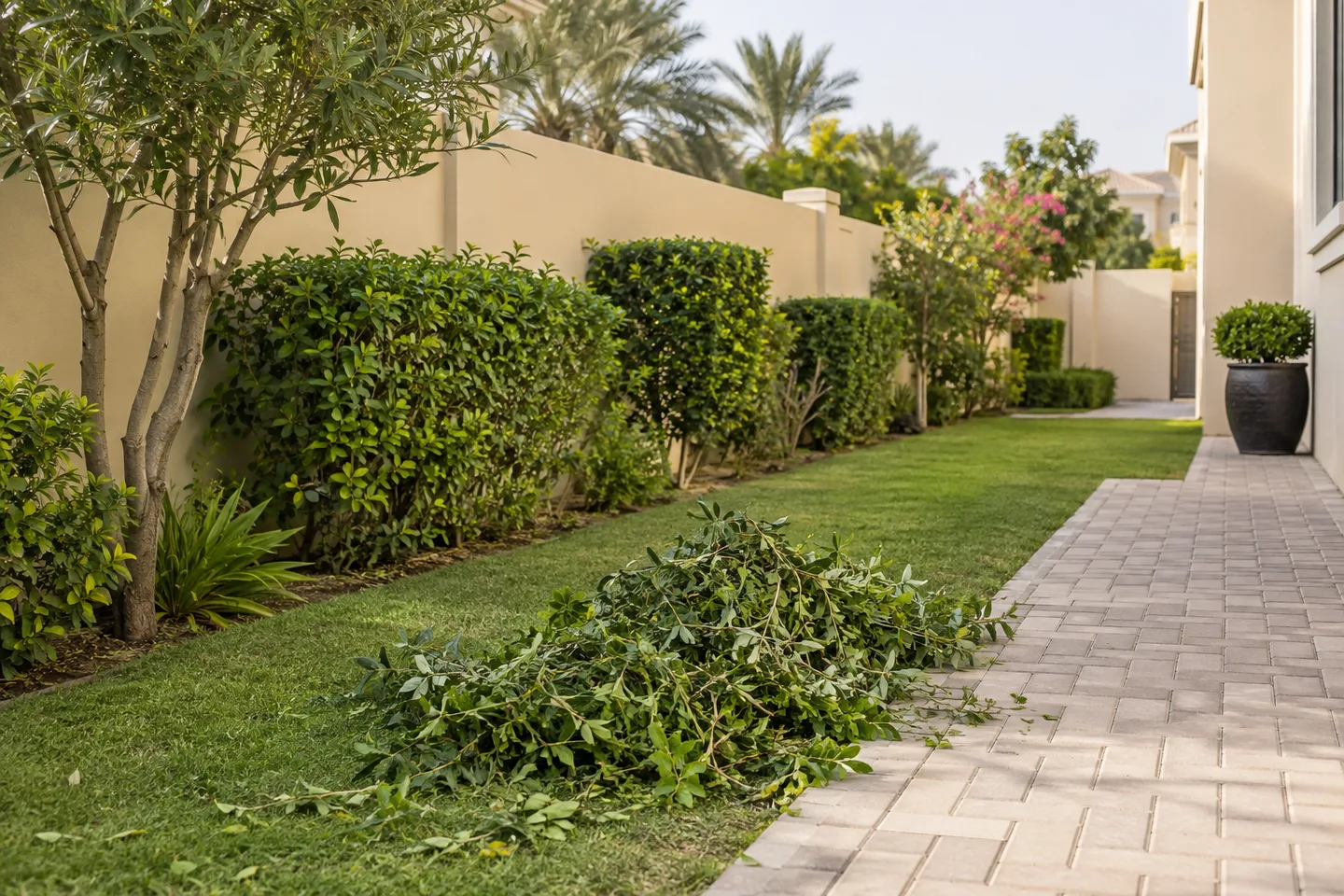
Waste collection should not be assumed to include pruning, tree removal, stump extraction or changes to planting beds. Fast Junk Service Dubai’s listed garden service covers branches and trimmings, grass and hedge clippings, soil and sand bags, pots and landscaping leftovers. That describes material to collect, not a landscaping crew to create it.
If an overgrown area still needs cutting back, agree that work with a suitable gardener or landscaper before arranging collection. Give both parties the same plan for what remains. A living hedge is not part of the removal load just because the space beside it needs clearing.
Dead palms, heavy root balls and standing trees need their own assessment before any work is promised. Similarly, changing decking, a pergola or paving is outside a straightforward garden-waste pickup. Describe a separate project separately instead of expecting the collector to dismantle it as an extra at the gate.
Walk the garden and identify what stays
Begin with a walk from the house to the farthest corner and identify the plants, pots and equipment that must remain. This is particularly useful where an untidy bed includes both retained planting and discarded containers. Point out irrigation lines, drain covers and lights along the proposed carry route.
For a rented villa, settle any proposed changes to the garden with the appropriate person before work starts. A collection booking should describe only approved material. Do not treat the fact that a planter is movable as a decision about whether it should leave.
- Identify live plants and filled planters that remain, even if their containers look weathered.
- Keep working hoses, irrigation equipment and garden lighting apart from discarded accessories.
- Show the crew which pile contains cuttings and which objects are still awaiting a decision.
- Keep the gate, house entrance and a usable route through the garden clear.
Photograph the whole garden as well as each waste group. A close view of branches shows their thickness, but the wider image shows whether they are behind a narrow gate or beside the driveway. Both are useful when estimating the collection.
Which materials should be kept separate?
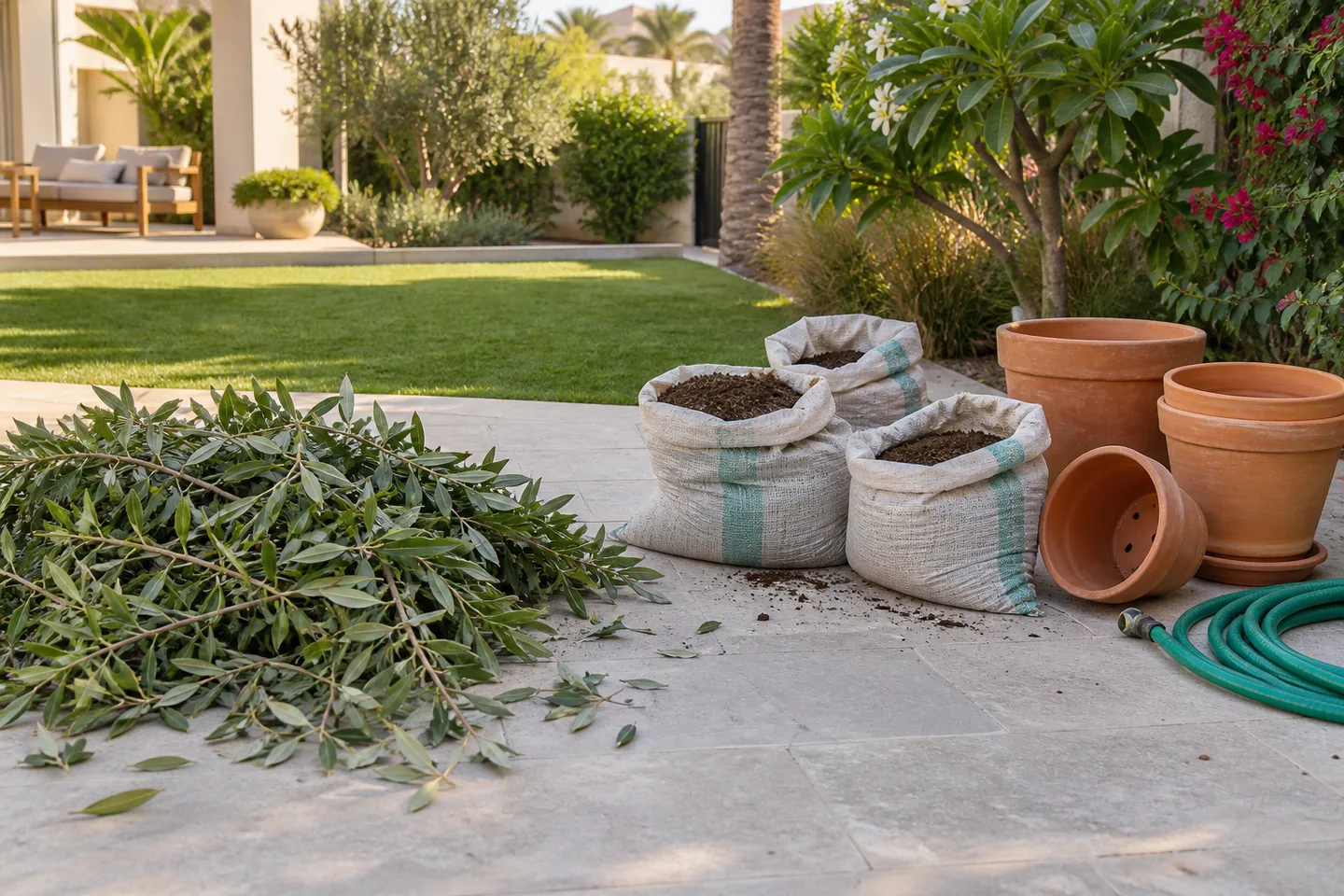
- Plant material: keep leafy cuttings, grass clippings and branches apart from plastic, pots and other rubbish.
- Soil and sand: describe these as a separate heavy load, including the bags or containers holding them.
- Pots and planters: say whether they are empty, full, broken or still planted.
- Artificial grass and packaging: identify them separately rather than mixing them into plant cuttings.
- Tools and powered equipment: list them individually, especially where batteries or other contents need a separate decision.
A garden pile is not one uniform material. A tall heap of hedge clippings can be awkward because of its bulk, while a smaller group of soil-filled pots can be awkward because of its weight. A quote based only on the area the pile covers misses that difference.
Do not add chemicals, fertilisers, gas cylinders or unidentified containers to the cuttings. Tell the service what is present and confirm a suitable route separately. Ordinary green-waste collection is not a general acceptance of everything that has been stored outdoors.
How much preparation is useful before collection?
Ask the collector how it wants each material presented before buying sacks or repacking the garden. Loose branches may be handled differently from fine clippings, and the acceptable container depends on the material and the receiving route. Sending a clear photograph first can avoid doing the same handling twice.
Keep soil bags manageable rather than filling a large sack simply because more fits inside. Mention wet material and damaged bags so handling can be planned. Do not drag a full planter across tiles or attempt to tip out a heavy container just to make the load match a guessed quote.
If the gardener is cutting branches to fit a route, have that person assess and do the cutting. Do not climb or use cutting machinery solely to prepare a collection. The useful household preparation is identifying and separating the material, leaving specialist work to the appropriate trade.
Plan the route from the garden to the vehicle
A pile at the back boundary needs a clear route all the way out. Tell the collector about the side gate, steps, tight turns and the distance to the intended parking position. If the only access passes through the house, say so before the quote is agreed.
In Dubai villa communities, check the arrangements for the vehicle and working window with community management where applicable. Keep material inside the agreed collection area until the visit; do not assume a pavement or shared parking space is available for staging. Gate access matters even when the waste itself is ready.
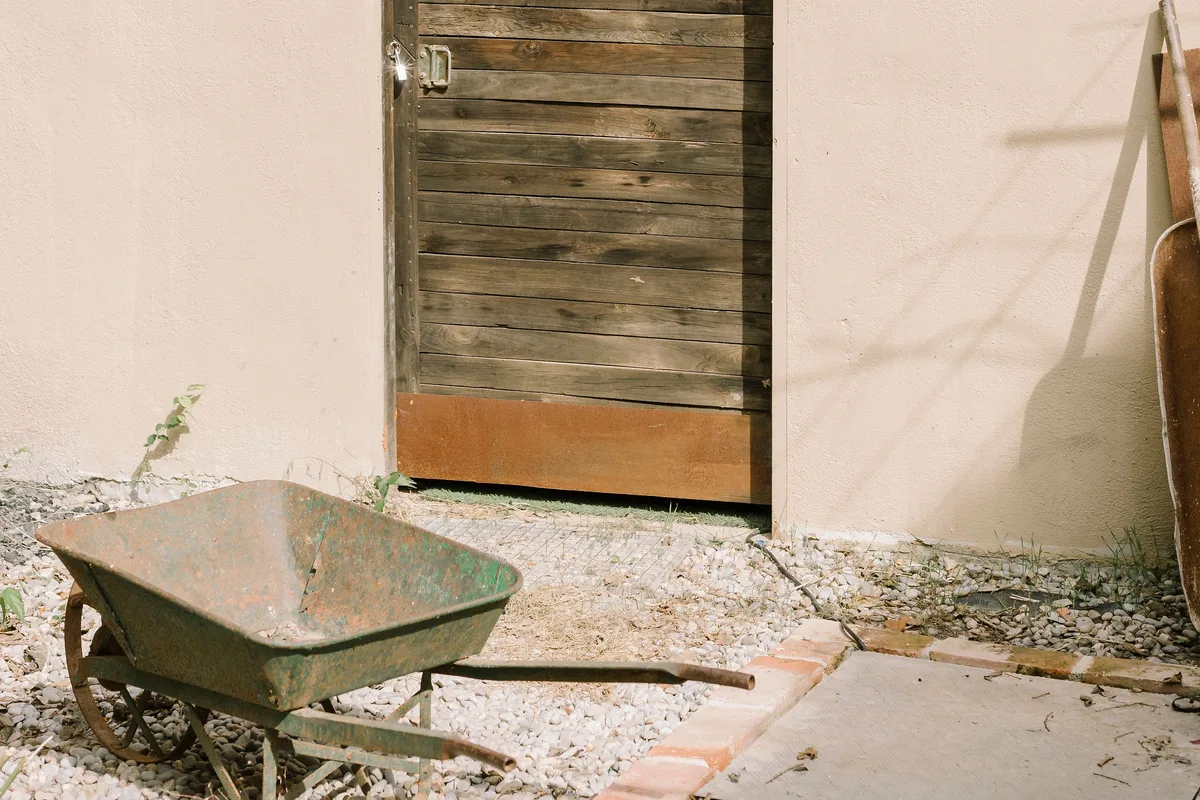
Explain any surfaces or features the crew must protect, such as a narrow tiled path beside irrigation tubing. A wheeled route may end where the garden begins, leaving part of the journey as a carry. Avoid promising unrestricted driveway access if another contractor or a parked car will occupy it.
What should the finished garden clearance include?
Agree which piles will be collected and what “clear” means at the end of the visit. Removing bags and branches does not automatically include raking every bed, levelling soil, repairing irrigation or cleaning stained paving. If a final sweep is wanted, include that in the discussion instead of assuming it follows from the word clearance.
Plant material can be routed through green-waste channels where available, but a mixed garden load should not be described as entirely composted or recycled. Keeping the material groups separate makes the proposed route easier to discuss. The furniture and shed guides cover those distinct parts of an outdoor clear-out without turning them into green waste.
Finish by checking the agreed piles against the collection list and confirming that retained plants, containers and equipment remain. A garden clearance is complete when the waste scope has been dealt with and the remaining garden is accounted for. It need not become an unplanned landscaping project to achieve that.