A studio is a whole home compressed into one room, and clearing it is a whole-home job with none of the usual room to work in. The bed, the sofa, the wardrobe, the kitchenette and everything stored above and beneath them share one floor, so there is no spare room to stage the load and no door to close on the part that is finished. This guide covers how a studio apartment clearance in Dubai actually runs: the furnished-let question that comes first, why the volume is nearly always underestimated, and how a crew works a single room without tripping over it.
What makes a studio different from a one-bedroom clearance
A one-bedroom apartment has a room to empty first and a room to stage in. A studio has neither. The whole load sits in the same space the crew is working in, which changes the sequence of the job more than the size does. The general apartment rules about lift bookings and building windows still apply and are covered in apartment junk removal in Dubai; what this page adds is the part that is specific to one room.
- No staging area: items cannot be gathered by the door without blocking the door. The crew loads in an order decided by the room's layout, not by convenience.
- Everything is multi-purpose: the sofa is a bed, the coffee table is storage, the wardrobe top is the loft. Each piece hides more contents than its size suggests.
- Furnished lets are the norm: many studios in Dubai are rented with the landlord's furniture, so a large share of what is in the room may not be yours to remove at all.
- The kitchenette is part of the room: cooking smells, opened food and a fridge that has not been defrosted are in the same space as the mattress being carried out.
Furnished or unfurnished: the first question
Before anything is listed for collection, establish which items belong to the landlord. Studios are more often let furnished or semi-furnished than larger apartments, and the furniture that came with the tenancy stays with it: the bed, the sofa bed, the wardrobe, the TV unit and usually the appliances. Removing a landlord's sofa because it looked worn is a deposit problem, not a clearance.
Check the handover inventory from the start of the tenancy against what is in the room now. Anything on the inventory is marked to stay, physically, with tape or a note, because in a single room a crew cannot rely on which corner an item is in. Anything you bought during the tenancy, and anything left behind by a previous occupant that the landlord has confirmed can go, becomes the collection list. If the studio was unfurnished, the list is simpler but the volume is larger, because the bed and wardrobe are yours and they are leaving.
What usually comes out of a studio
For an unfurnished studio, or a furnished one where the tenant added their own pieces, the collection list is remarkably consistent across the city.
- A bed or sofa bed and its mattress, listed as two items because they travel and are disposed of differently.
- A wardrobe, freestanding in most studios, which is the piece most likely to need dismantling to leave the room.
- A small dining table and two chairs, a desk, and a TV unit or shelving.
- Kitchen contents: small appliances, crockery, and a microwave or tabletop oven that belongs to the tenant.
- Storage boxes from above the wardrobe, under the bed and inside the ottoman, which are where the surprise volume lives.
- Rugs, curtains bought to replace the landlord's, a drying rack, an ironing board and the bicycle on the balcony.
Why the volume is deceptive
Studios are underestimated in almost every quote request, because the request describes the room and the room looks small. The load is not the room; it is the room plus everything the room was forced to hide. A studio that has been lived in for three years typically holds the contents of a one-bedroom apartment stacked vertically: boxes on the wardrobe, bags under the bed, a second layer behind the sofa, and a balcony used as a storeroom.
Photograph the hidden spaces as well as the visible ones when asking for a quote: the top of the wardrobe from a chair, the space under the bed with the bed skirt lifted, the inside of the ottoman and the balcony. A crew quoting from those photos arrives with the right vehicle; a crew quoting from a photo of a tidy room arrives with a van that fills before the wardrobe comes down.
Working in one room without a staging area
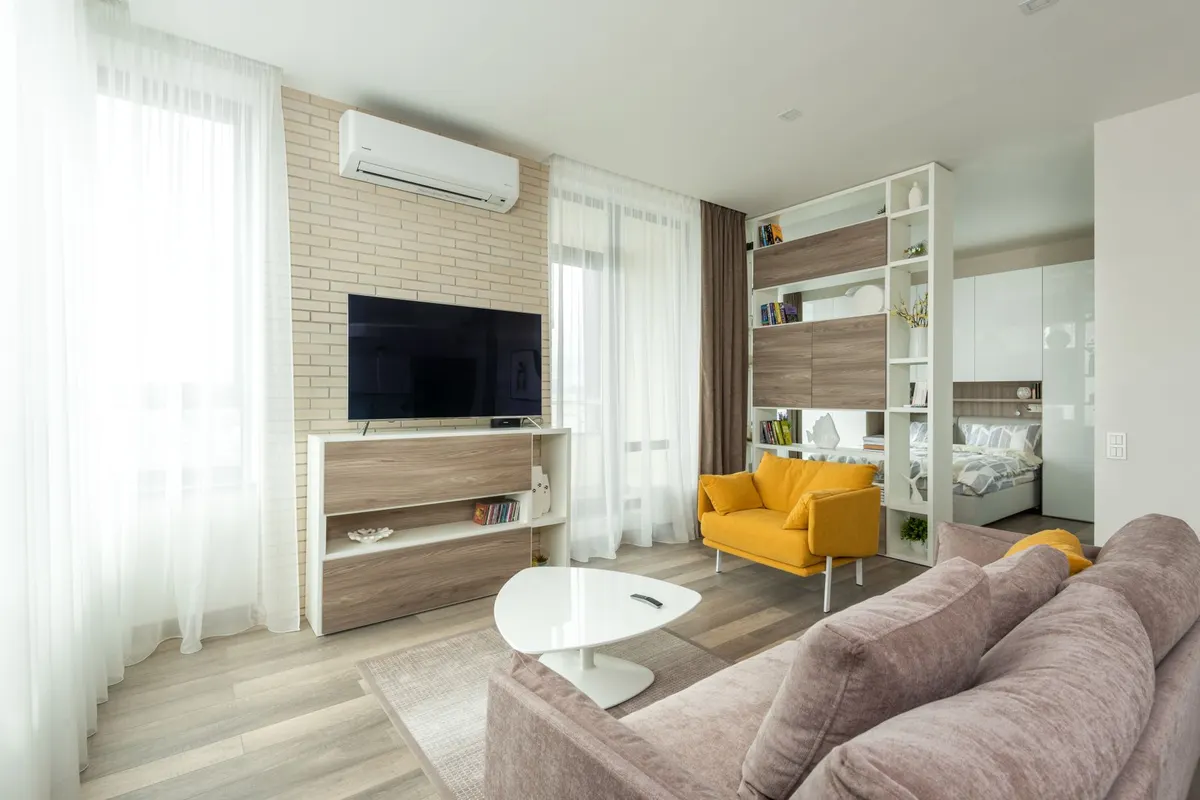
The sequence in a studio is decided by geography. The crew starts at the point furthest from the door, usually the bed or the balcony, and works towards the exit, so every item carried out passes through space that has already been cleared. Loose contents go first, in boxes and bags, because they are what makes furniture impossible to lift safely; then the furniture leaves largest-first so the wardrobe is not being dismantled around a pile of chairs.
- Clear the balcony and the top of the wardrobe first, so nothing has to be reached over furniture later.
- Box and bag every loose item, then move the boxes out of the room to the corridor or lift lobby if the building allows it, or into the lift as the first load if it does not.
- Take the mattress out upright, then dismantle the bed frame or fold the sofa bed.
- Dismantle or carry the wardrobe, which is usually the piece that decides whether the lift car is wide enough.
- Finish with the kitchenette and the small pieces, then sweep the empty floor and check the meter cupboard and the balcony corner.
The corridor is the difference between a smooth studio clearance and a slow one. Buildings with wide lift lobbies let the crew stage there; buildings that forbid anything in the corridor mean each load goes straight from room to lift, and the lift booking window has to be longer. This is worth asking building management about when the permit is requested, alongside the lift-car measurements that decide whether the wardrobe leaves whole.
What it costs and how long it takes
A studio clearance is priced the same way as any other apartment job: on the volume that actually leaves, the floor and lift situation, and any dismantling. What surprises people is that a furnished studio with only the tenant's additions can sit near the minimum charge, while an unfurnished studio that has been lived in for years can price like a small one-bedroom, because the bed, wardrobe and three years of storage are all on the load. The photo set decides which of the two yours is.
Time runs from around an hour for a furnished studio with a few boxes to a half day for a full unfurnished one in a tower with a shared lift. High-turnover studio districts such as JVC and International City see this job constantly at month-end, so booking the lift window early matters more there than the size of the load.
A studio is cleared well when two things are settled before the crew arrives: which items are the landlord's, marked so nobody has to guess, and how much is really there, photographed from the hidden angles rather than the doorway. Get those right and one room empties faster than its contents suggest; get them wrong and the smallest apartment in the building becomes the slowest job of the day.