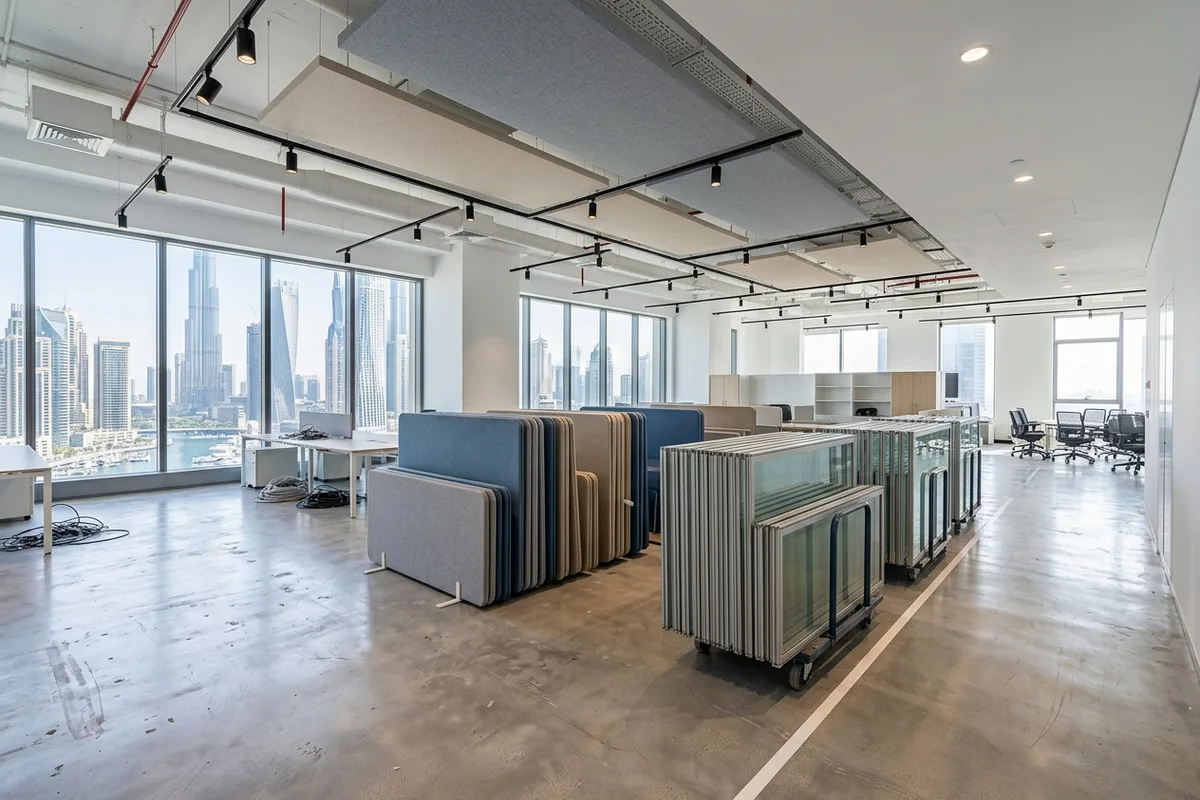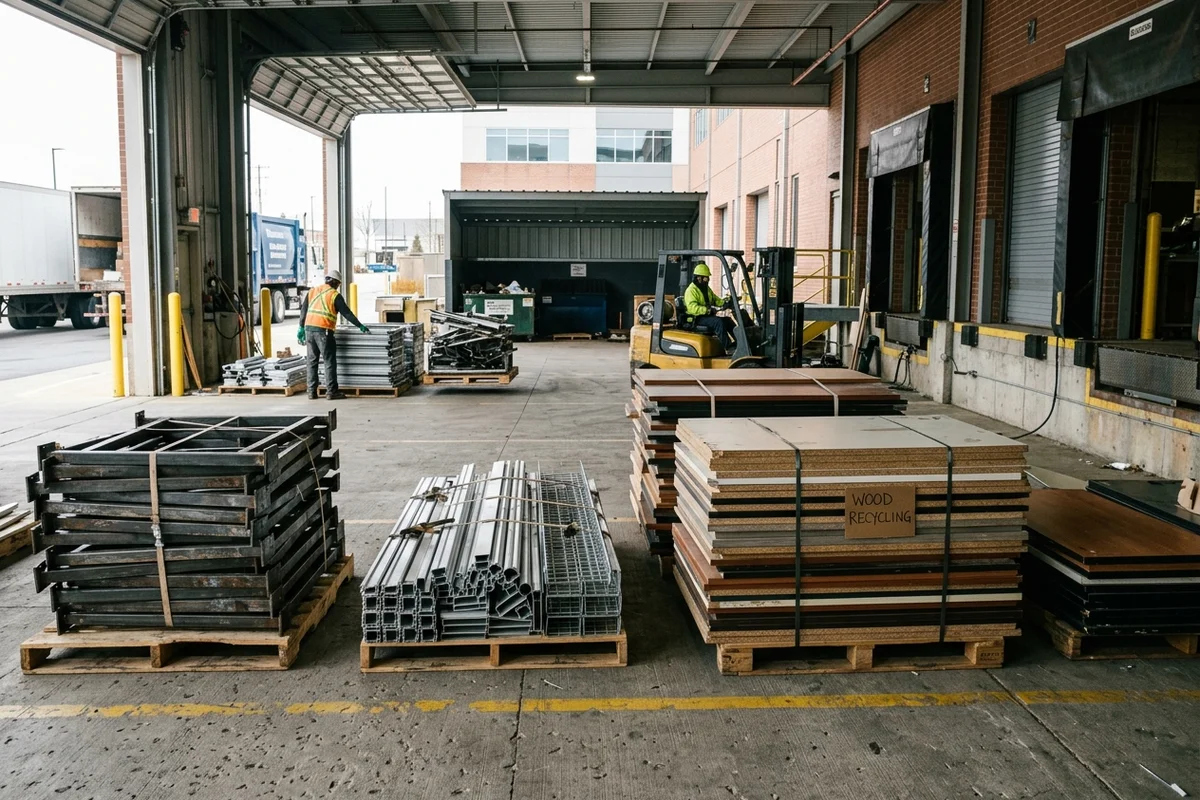
When commercial office furniture in Dubai reaches the end of its useful lifespan or is too worn for secondary resale and charitable donation, responsible recycling becomes the primary diversion strategy. Corporate tenants and facility managers in major business centres like Dubai Silicon Oasis and Business Bay face increasing expectations to minimise commercial waste sent to municipal landfills. However, recycling modern office furniture is fundamentally different from processing domestic scrap. Commercial workstations, ergonomic chairs, and partition systems are complex, multi-material assemblies engineered for structural resilience rather than effortless disassembly. Achieving genuine circular outcomes requires systematic dismantling, clean material segregation, and transparent chain-of-custody documentation. This guide details how commercial office furniture is broken down into clean industrial material streams and how businesses can coordinate responsible furniture removal in Dubai.
Why commercial furniture cannot be recycled in single streams
A widespread misconception in office facility management is that whole commercial desks or task chairs can simply be deposited into general mixed recycling containers. In reality, industrial recycling plants reject unsegregated commercial furniture loads:
- Composite bonding: Desks feature synthetic melamine foils permanently adhered to dense particleboard cores with thermosetting glues. These cannot be pulped with clean paper or cardboard and must not contaminate pure wood recycling lines.
- Bi-metallic and composite assemblies: Steel support legs are frequently welded to cast aluminium mounting brackets, fitted with nylon levelling feet, and channeled with PVC electrical cable conduits. Secondary metal smelters require high purity and will reject contaminated scrap charges.
- Pressurised and hazardous elements: Ergonomic office seating contains sealed nitrogen gas lift cylinders and tension springs that represent severe physical hazards in industrial shredders if not removed beforehand.
Because single-stream processing is technically impossible for assembled furniture, effective recycling relies heavily on manual pre-sorting and methodical mechanical dismantling.
Material-by-material recycling breakdown of office furniture
To understand where decommissioned office furniture ends up, facility managers can examine the five primary material streams recovered during commercial clearances:
1. Structural steel
Steel forms the heavy structural backbone of modern offices: desk underframes, cantilever legs, modesty panel brackets, and metal storage cabinets. Metal filing cabinets, as highlighted in our guide to filing cabinet disposal, represent virtually 100% recyclable steel once cleared of paperwork. Steel scrap is magnetically separated, sheared, and sent directly to regional electric arc furnace mills, where it is melted into new construction reinforcing bars and industrial sections with zero loss of structural integrity.
2. Extruded and cast aluminium
Aluminium is used in premium office partition extrusions, demountable screen posts, and 5-star swivel chair bases. Our guide to office partition removal details how demountable aluminium frames are stripped out cleanly. Aluminium is among the most valuable recyclable commodities: re-smelting secondary aluminium requires approximately 95% less energy than producing primary aluminium from bauxite ore, making aluminium segregation a major carbon-saving victory.
3. Melamine-faced particleboard and MDF
Workstation surfaces, drawer faces, and boardroom table tops are typically manufactured from melamine-faced chipboard (MFC) or medium-density fibreboard (MDF). Because these engineered boards contain cured resins and synthetic plastic laminates, they cannot be recycled into raw lumber or paper pulp. Instead, specialized timber recyclers mechanically chip and shred the boards into uniform wood fractions used as raw core material for secondary industrial particleboards or processed for licensed biomass energy facilities.
4. Polyurethane foam and upholstery textiles
Task chairs, soft lounge seating, and acoustic wall panels incorporate dense polyurethane (PU) flexible foam covered in polyester fabrics. Clearance teams strip fabric away from foam cushions; the polyurethane foam is then granulated and bonded with polyurethane prepolymers to produce heavy-duty carpet underlay, athletic gym mats, and industrial acoustic dampening panels.
5. Engineering plastics
High-impact nylon, polypropylene (PP), and ABS polymers from chair armrests, caster wheels, and under-desk cable grommets are isolated from metal shafts. These clean technical plastics are ground into flaked regrind and re-pelletised for manufacturing non-structural plastic products such as construction spacers and industrial storage bins.
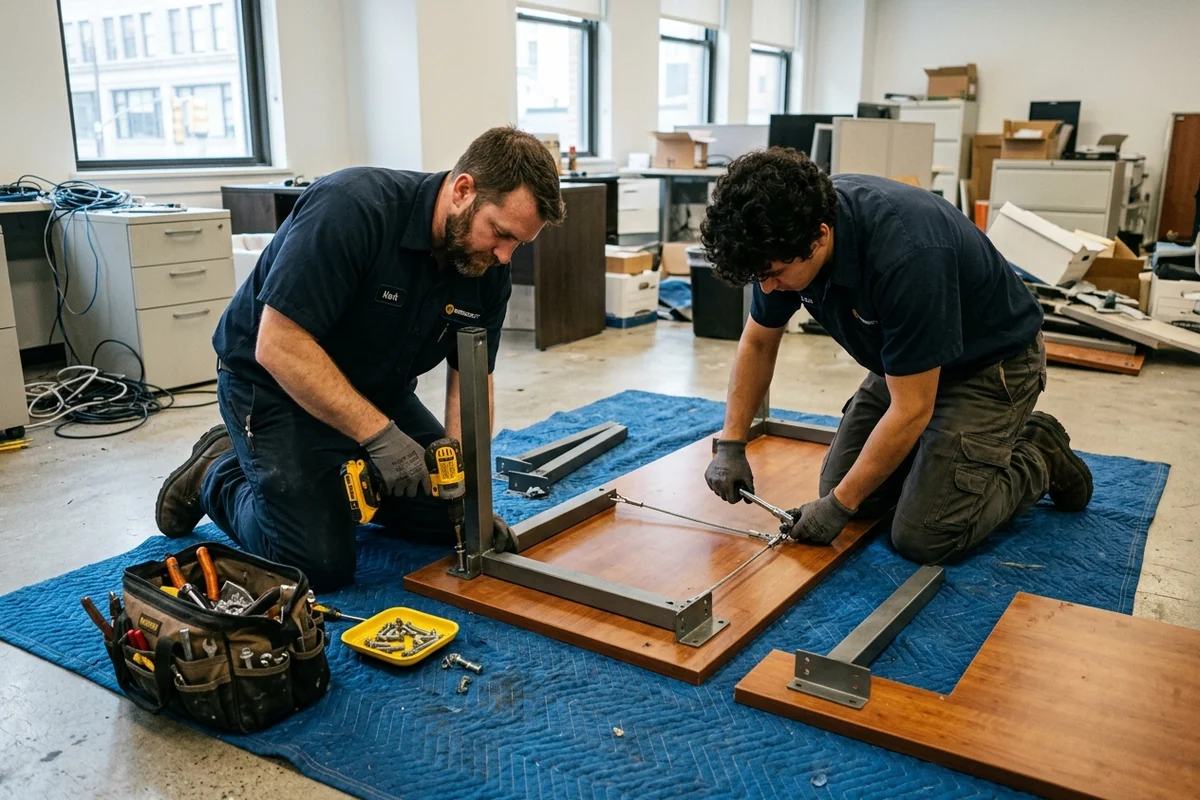
On-site dismantling: how separation happens before hauling
The most efficient recycling operations occur directly on the office floor before items are loaded onto collection trucks:
- Tooling and precision breakdown: Uniformed clearance technicians use cordless drivers and hex bits to separate steel legs, beams, and brackets from wooden tops, placing all metal hardware into dedicated crates.
- Volume compression: Assembled workstations occupy enormous cubic space inside removal vehicles. Stripping desks down into flat-stacked laminate tops and nested steel frames reduces transport volume by more than 50%, dramatically lowering carbon emissions from hauling trips.
- Corridor and elevator transit: Disassembled components are transported on padded flatbed trolleys, navigating narrow doorways and commercial freight elevators in busy towers across Business Bay without scratching polished lobby walls or damaging lift interiors.
Conducting on-site separation ensures materials arrive at licensed processing hubs pre-sorted, maximizing recovery percentages.
Corporate compliance and waste transfer documentation
For corporate enterprises adhering to sustainability mandates, verifying where dismantled office furniture goes is essential. Responsible commercial waste collection provides a verifiable chain of custody:
- Waste collection manifests: Detailed documentation recording the item types, volume tiers, and property address from which assets were collected.
- Sorting facility weighbridge tickets: Certified weight receipts from authorized material recovery facilities confirming tonnage delivered to licensed metal, wood, and recycling processors.
- Separation of e-waste: Any integrated power distribution tracks, USB charging blocks, or desk cables must be disconnected and routed through specialized e-waste disposal facilities to recover copper wiring and circuit boards safely.
Maintaining these manifests ensures corporate facility directors have verifiable records for annual environmental disclosures, landlord lease reconciliations, and corporate ESG reporting.