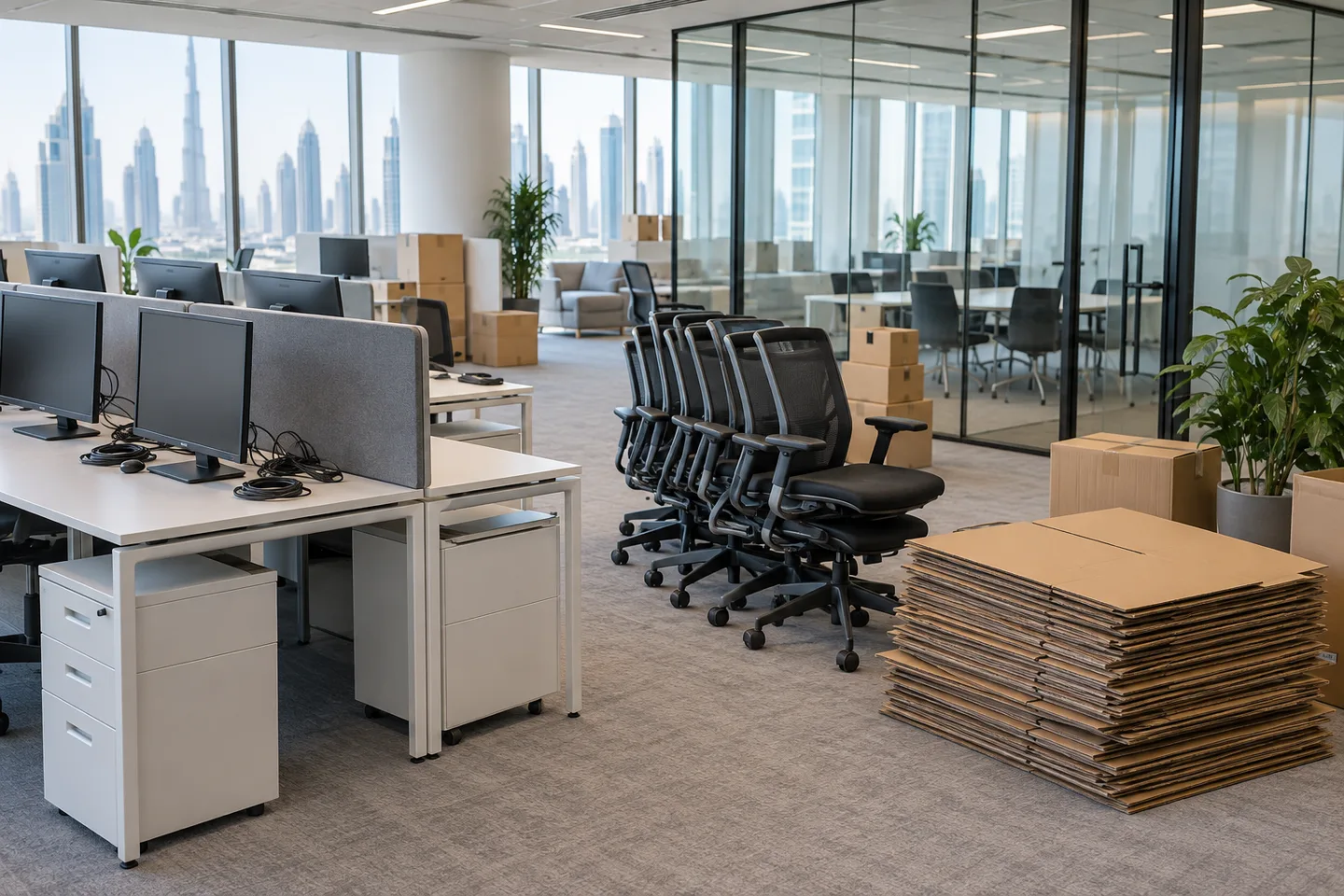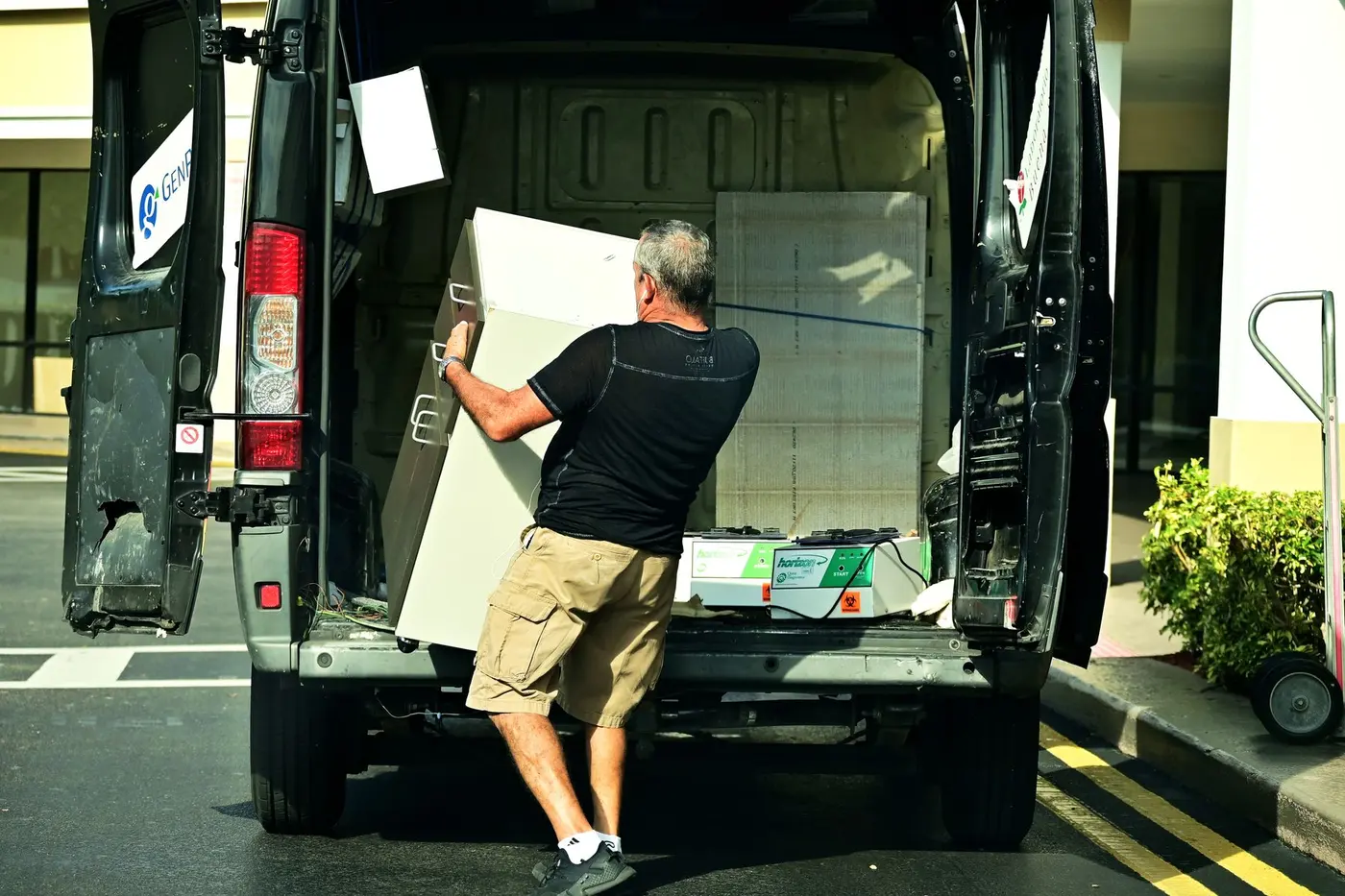
Commercial waste collection in Dubai covers two different jobs that are easy to confuse. Routine operational waste, such as pantry bags, shop-floor sweepings and daily office bins, goes through the bin arrangement already set up for the premises. The irregular surplus those bins were never sized for, such as carton stacks after a delivery, broken chairs, retired equipment and fit-out offcuts, needs a planned pickup through a route such as furniture removal. Telling the two apart is the first step to paying for the right collection.
Two waste streams need two collection routes
Routine waste is predictable in type and volume. It belongs in the bins or containers provided for the premises and is collected on the schedule run by building management or the business's own waste contractor. If nobody on the team knows who runs that arrangement, ask the landlord or facilities contact before calling a removal company.

- Routine stream: food and pantry waste, daily office bins and bagged general waste produced every working day.
- Surplus stream: bulky packaging, damaged display fixtures, old furniture, obsolete equipment and fit-out offcuts produced in bursts.
- Separate-route stream: data-bearing electronics, batteries, chemicals, liquids and anything the operator must accept specifically before collection.
Problems start when one stream is forced into the other's route. Flattened cartons from a stock take can fill a shared bin area and block it for other tenants. Booking a truck every day for ordinary bags pays for vehicle and crew time the bin arrangement already covers. The guide to garbage removal in Dubai explains the same split from the household side.
What a business surplus collection usually takes
A business pickup is built around items that are too large, too numerous or too irregular for routine bins. Most commercial surplus falls into four groups.
- Packaging: cartons, pallet wrap, foam inserts and protective corners from deliveries, kept dry and flattened where possible.
- Furniture and fixtures: chairs, desks, shelving, display units and storage the business has approved for removal.
- Electrical and IT equipment: monitors, printers and pantry appliances, routed through e-waste disposal once any data-bearing device has been released by the business.
- Fit-out leftovers: board offcuts, ceiling tiles and similar light debris, handled as construction debris removal rather than general junk.
Confirm anything outside these groups before the vehicle is booked. Food waste, oils, paint, chemicals and gas cylinders need their own arrangement and should never be hidden inside a bag of general surplus. Describing them honestly at the quote stage is faster than having them set aside on collection day.
Choose a one-off, periodic or on-call collection
The right frequency follows the rate at which surplus builds up, not a fixed calendar. Three patterns cover most businesses.
- One-off: a single collection after a refurbishment, stock clear-out or closure. The scope for that kind of job is set out in commercial junk removal in Dubai.
- Periodic: a repeated collection, for example after each monthly delivery cycle or at quarter end, when surplus builds at a predictable rate.
- On-call: no fixed date; the business books when its holding space reaches an agreed trigger, such as a full rear store or a set number of carton stacks.
Periodic pickups suit retailers, restaurants and offices with regular deliveries. On-call suits businesses whose surplus arrives unevenly. In both cases, write down the trigger or date, the categories included and the person who confirms each visit, so a repeated collection does not drift into taking items nobody approved.
Store surplus safely between collections
Surplus waiting for collection needs a defined holding space inside the premises the business controls. A rear store, a cleared corner of a warehouse or a marked back-of-house area is suitable. A fire exit, a shared corridor, a loading bay used by other tenants or the pavement outside a shop is not.
Flatten cartons, stack them off the floor and keep them dry. Keep damaged furniture clear of doors, and keep electrical equipment apart from packaging so it is not crushed or mistaken for rubbish. In the Dubai summer, anything that smells or attracts pests belongs in the routine bin stream the same day, not in a holding area waiting for a monthly pickup.
Time each pickup around trading hours and building access
A good pickup window is one when the goods route is open and the business can spare the space. At a warehouse or showroom unit in Al Quoz, a truck may reach the roller door directly but still competes with deliveries and neighbouring units for the yard. In a tower, the loading bay and goods lift usually need booking through building management.
Choose the slot that keeps the customer entrance and working areas clear. A restaurant may prefer an early pickup before preparation starts, while a shop may prefer the hour after closing. With collection hours running from early morning to late evening every day of the week, the constraint is usually the building's window rather than the crew's.
What decides the price of a commercial collection
The price of a commercial collection follows volume, handling and access rather than the word commercial. These are the factors that move it.
- Volume and density: how much vehicle space the load takes, and whether it is light cartons or heavy steel shelving.
- Category mix: electronics, fit-out debris and furniture may each need separate handling and onward routes.
- Access: the floor, goods-lift booking, distance from the loading point and any wait for a building window.
- Timing and frequency: out-of-hours slots and how often the collection repeats.
Send photographs of the holding area, a rough count of large items and the access details with each request. A repeat collection is easiest to price when every visit follows the same scope. The general logic of pricing by truck load applies to business surplus as well.
Commercial waste collection runs smoothly when each stream has its own route: routine bags in the bins provided for the premises, surplus in a defined holding space until a planned pickup, and restricted items in a separately agreed arrangement. Set the trigger, the categories and the approver once, and each later collection becomes a short confirmation rather than a fresh negotiation.