Vacating a leased corporate workplace in Dubai is governed by formal contractual agreements and commercial property regulations. Beyond the day-to-day logistics of moving out, commercial tenants face binding legal covenants that dictate the precise physical condition in which premises must be returned to the property owner. In premier corporate districts like DIFC, Downtown Dubai, and Business Bay, commercial landlords enforce rigorous inspection protocols before issuing clearance certificates or refunding substantial tenancy security deposits. Distinguishing between ordinary wear and tear, tenant dilapidation liabilities, and structural fit-out reinstatement is essential for a frictionless exit. This guide details standard landlord requirements for vacating an office in Dubai, helping business owners prepare their premises to meet inspection standards without unexpected contractual deductions.
Understanding your lease handover condition: fitted vs shell
The scope of work required to vacate a commercial office begins with the specific condition clauses defined in your tenancy contract and original handover report:
- Fitted office handover covenants: If your company leased a fully or semi-fitted unit, the contract typically requires returning the space in the exact layout received, minus standard operational wear. All tenant-introduced freestanding furniture, demountable shelving, and loose electrical fittings must be cleared completely.
- Shell-and-core reinstatement requirements: When a tenant leases bare concrete space and executes a bespoke architectural fit-out, commercial leases frequently include full reinstatement clauses. Landlords may mandate the complete removal of non-structural partitions, bespoke flooring, and suspended ceilings, restoring the unit to a bare shell unless the incoming tenant formally purchases the existing fit-out.
- Landlord-approved alterations: Any modifications executed during your lease that were officially approved in writing by the landlord should be cross-referenced against your exit schedule to ensure you are not penalised for permitted improvements.
Reviewing your original agreement weeks before planning physical office move out clearance establishes clear boundaries between what must be cleared and what must remain.

Dilapidations versus fair wear and tear in commercial premises
Commercial leasing disputes often arise over differing interpretations of dilapidations and acceptable surface degradation:
- What constitutes fair wear and tear: Minor scuffs on skirting boards, natural carpet shading in high-traffic corridors, and slight fading of paint finishes caused by natural sunlight are generally recognized as fair wear over multi-year tenancies.
- Tenant dilapidation liabilities: Deep gouges in vinyl flooring from dragged furniture, broken ceiling tiles, holes left by wall-mounted televisions or heavy shelving, and damaged glass door hardware represent tenant damage that landlords will charge to repair.
- Branding and signage removal: Tenants are strictly required to strip all corporate branding, frosted manifestations, reception logo signs, and vinyl lettering from external entrance glazing and interior walls, repainting affected surfaces to neutral base tones.
Addressing obvious tenant-induced defects proactively prevents landlords from appointing their own contractors at inflated commercial rates.
What a clearance crew handles versus contractor reinstatement
Understanding trade demarcations ensures you commission the correct professional services during your move-out phase:
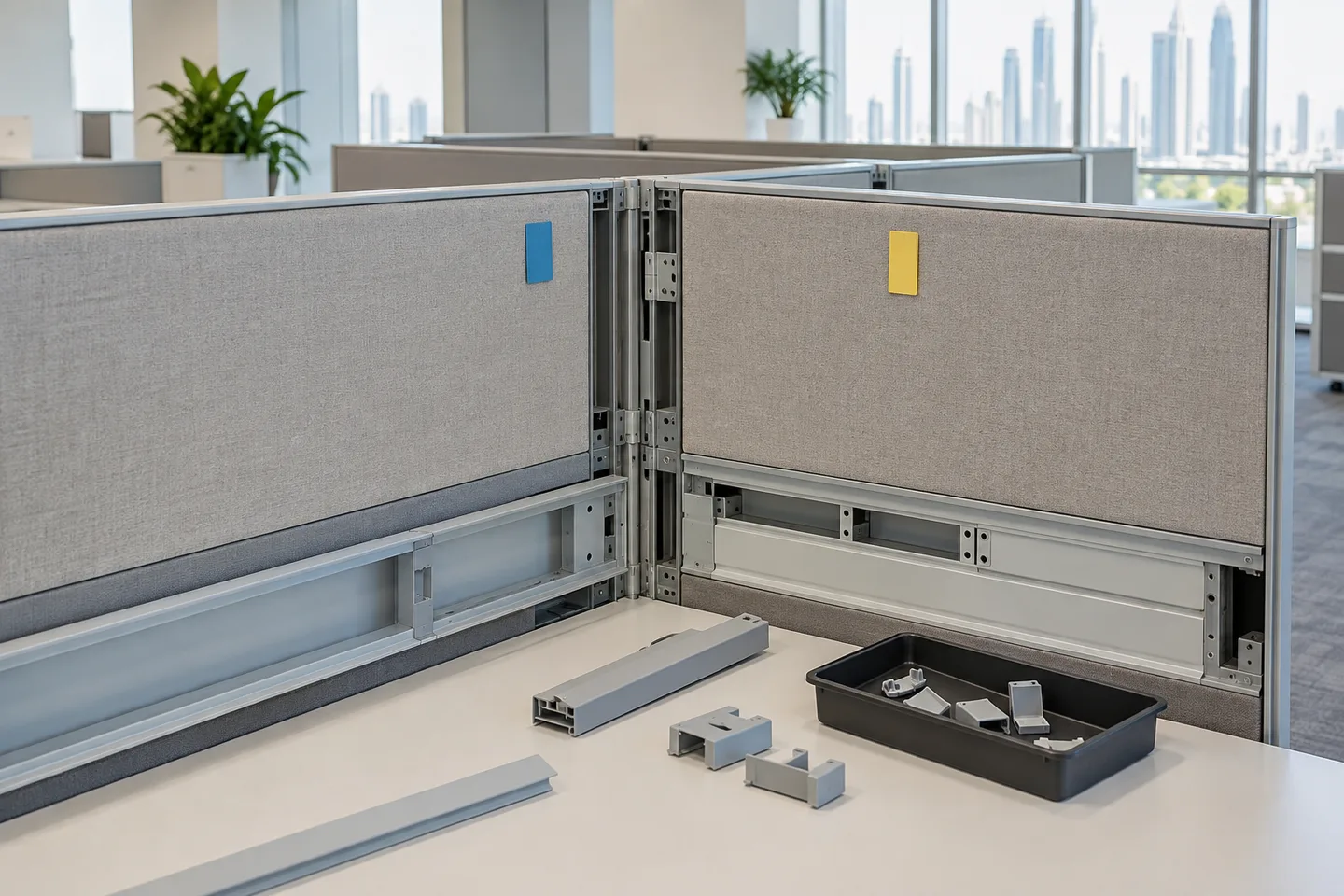
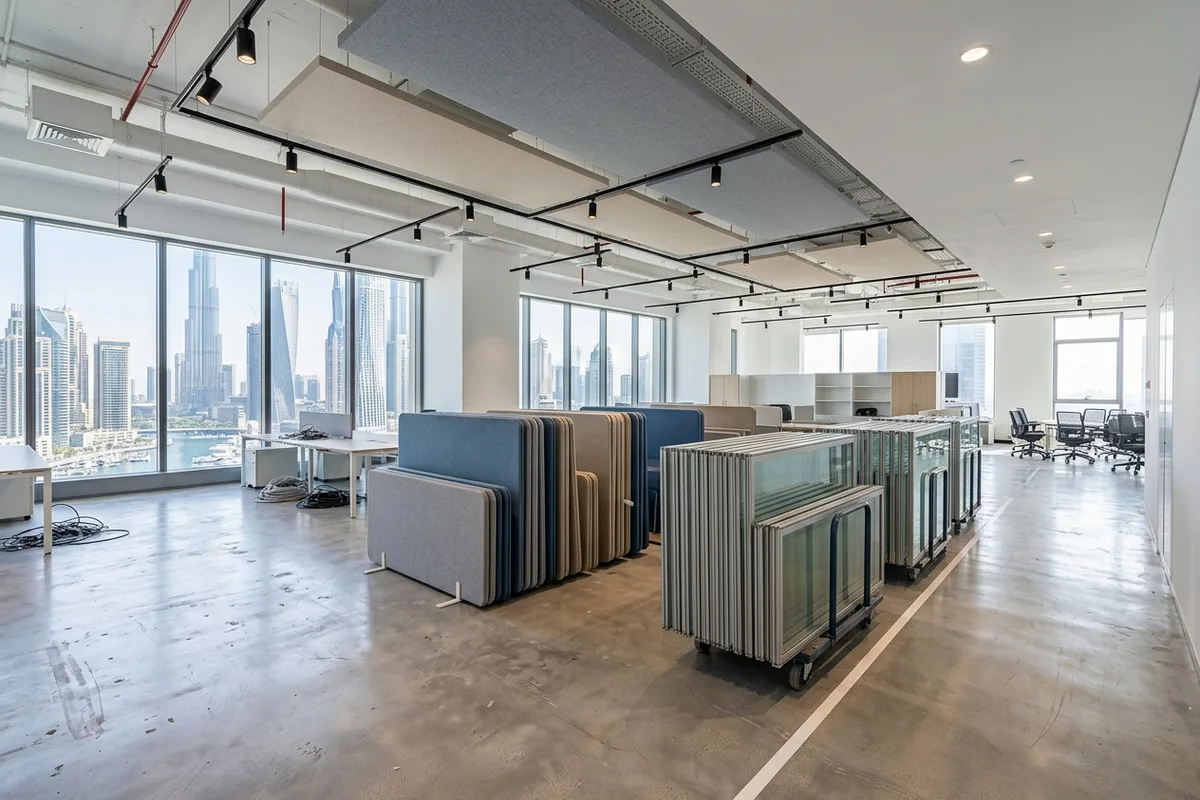
- Professional clearance scope: Professional furniture removal crews extract loose workstations, task chairs, conference tables, mobile pedestals, pantry appliances, and non-structural office partitions. They handle physical dismantling, protective corridor transport, vehicle loading, and certified municipal disposal.
- Licensed fit-out and MEP contractor scope: Decommissioning dedicated air handling units, modifying base-building fire alarm sprinkler heads, altering main electrical distribution boards, and demolishing masonry walls require licensed fit-out contractors with civil defence approvals.
- Debris and waste removal: Specialist construction debris removal teams clear the residual timber, acoustic tiles, and partition offcuts generated during de-fit works, ensuring common building areas remain immaculate.
Separating furniture haulage from technical architectural reinstatement keeps your exit timeline organized and compliant with building management safety codes.
Conducting the joint pre-handover inspection walkthrough
Never leave property inspection to the final day of your lease. Organising a structured pre-exit schedule protects tenant interests:
- Schedule a preliminary walkthrough fourteen days prior to expiry: Request that the landlord, property asset manager, or appointed facilities surveyor inspect the space with your representative.
- Compile an agreed dilapidation snag list: Document every item identified for removal, repair, or touch-up in writing, accompanied by clear photographs signed by both parties.
- Execute scheduled clearance and repairs: Mobilise clearance and trade crews to complete the agreed actions, leaving an administrative buffer of at least three business days before contract expiry.
- Conduct the final handover inspection: Walk the cleared unit to verify that every item on the preliminary snag list has been resolved to the landlord's satisfaction.
A documented paper trail eliminates subjective disputes and ensures both sides agree on the final state of the premises.
Connecting clearance completion to security deposit release
Securing the full refund of your commercial security deposit requires closing several administrative and physical loops:
- Broom-clean physical sign-off: The landlord or property manager must sign a formal premises condition handover form acknowledging that all tenant items have been cleared and the property is vacated.
- Final utility clearance certificates: Tenants must settle outstanding bills and obtain final clearance documentation from DEWA and district cooling providers (such as Empower or Tabreed).
- Surrendering building access credentials: Return all physical master keys, access security cards, parking gate fobs, and visitor passes issued at lease inception.
- Formal deposit claim submission: Submit the signed handover certificate alongside final utility receipts to the landlord's finance department to initiate deposit refund processing.
By methodically addressing landlord requirements from contract review through final inspection, businesses ensure a clean contractual exit that protects capital and preserves professional commercial standing.