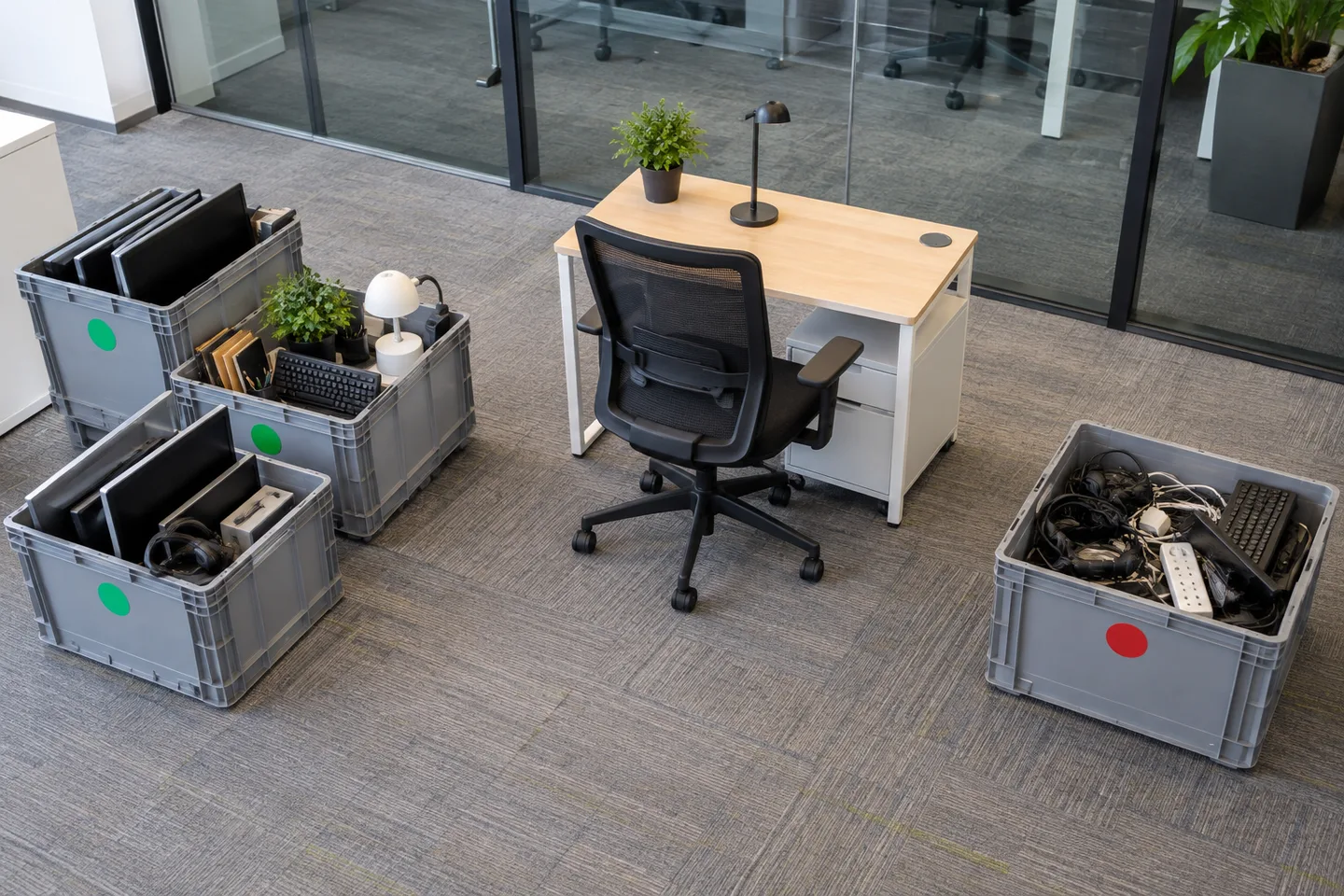
When companies in Dubai upgrade their workspaces, downsize staff floors, or complete a commercial lease, donating surplus desks, chairs, and storage units is often their first instinct. Passing functional office assets to charitable organisations, community initiatives, and educational centres prevents usable furniture from entering landfill streams while delivering real social value. However, corporate donation operates under entirely different logistical and regulatory constraints than domestic furniture giving. In commercial business hubs like Business Bay and Downtown Dubai, successful donation requires early planning, strict condition checks, and dedicated transport coordination. This guide outlines how Dubai businesses can navigate corporate furniture donations effectively without jeopardising office move-out deadlines.
Why donating office furniture is different from household items
Corporate furniture donation involves governance and scale challenges that domestic clear-outs rarely encounter:
- Asset register sign-offs: Corporate furniture represents company property recorded on financial depreciation schedules. Before desks or chairs can leave the floor, finance and operations teams must officially write off the items and issue disposal authorizations.
- Bulk volume and uniformity: Unlike a resident donating an individual armchair, a corporate office typically offloads dozens or hundreds of uniform workstations, task chairs, and filing pedestals simultaneously. Matching large batches to recipient facilities requires extensive coordination.
- Building gate passes and security permits: Removing large furniture inventories from high-rise commercial towers requires security approvals, tenant NOCs, and strict loading dock reservations that third-party non-profits cannot easily manage on their own.
Treating corporate donation as an informal giveaway often results in administrative friction and stalled move-out timelines.
What types of organisations accept corporate furniture in Dubai?
Not all charities or non-profits have the physical capacity or facility layout to absorb commercial-grade office suites. The most viable recipient channels include:
- Charitable schools and vocational training institutes: These organisations regularly need sturdy computer desks, student study tables, whiteboards, and ergonomic seating for classrooms and administrative offices.
- Non-profit community centres and humanitarian foundations: Registered local charitable bodies often require meeting room tables, visitor lounge chairs, and filing cabinets to furnish operational branches.
- Worker accommodations and facility management offices: Company welfare programmes and support facilities frequently accept surplus metal lockers, utility tables, and durable task chairs for on-site staff offices.
Reputable charitable partners apply clear intake criteria. They require photos, accurate item dimensions, and confirmation of working order before accepting a donation.
Condition standards for corporate furniture donation
Recipient organisations operate with limited budgets and lack dedicated carpentry or upholstery workshops to refurbish damaged commercial equipment. Consequently, donated items must meet strict condition standards:
- Complete mechanical integrity: Ergonomic task chairs must feature fully functioning hydraulic lift cylinders, intact tilt tensioners, and secure armrests. Worn or broken seating cannot be accepted.
- Intact surface finishes and hardware: Modular desks must have clean laminate surfaces free of deep gouges, complete mounting brackets, and all original leg fasteners. Melamine boards with swollen water damage or split screw housings will be rejected.
- Matching sets and modular consistency: Organisations strongly prefer uniform groups of four, six, or eight workstations over mismatched orphan pieces, as consistent layouts are essential for operational spaces.
- Keys for locking storage units: Metal filing cabinets and mobile drawer pedestals must include functional keys or have their locks removed to remain usable.
If furniture is chipped, unstable, or missing structural bolts, it should be routed directly to industrial furniture removal in Dubai for scrap material recycling rather than donation.
The transport reality: who moves the furniture?
The most common misconception among business owners is expecting recipient charities to provide free transport and labour to extract furniture from high-rise offices. In reality, transportation is the donor's responsibility:
- Charity logistics limitations: Most humanitarian organisations in Dubai maintain light vans configured for food distribution, clothing collections, or medical aid—not heavy tail-lift flatbeds suited for commercial office stripping.
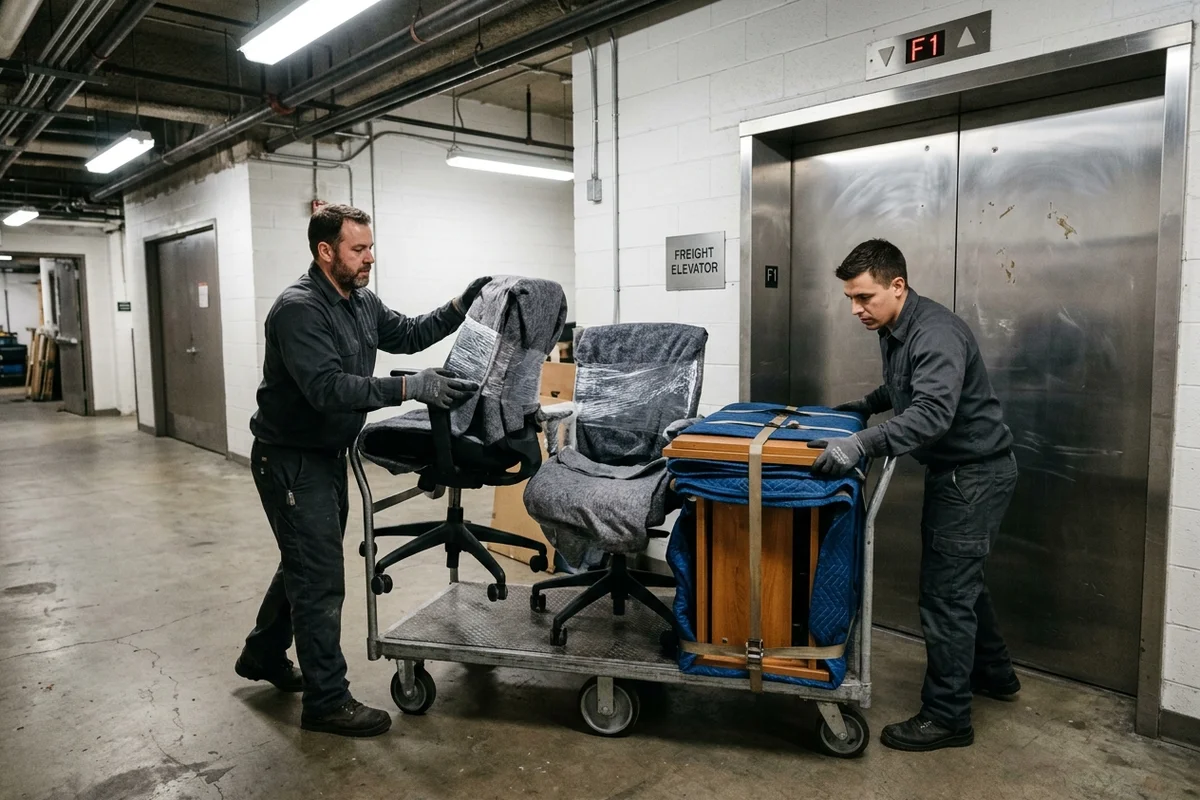
- High-rise access requirements: High-density commercial districts like DIFC require comprehensive third-party liability insurance, deposit cheques, and protective elevator padding from any collection crew entering the freight bays. Uninsured voluntary drivers cannot gain building access.
- Self-funded clearance solutions: To complete a successful donation, corporate donors typically arrange and fund professional commercial junk removal crews to dismantle, pack, and transport the agreed inventory directly to the charity's warehouse.
Factoring transport costs into your corporate giving budget ensures items actually reach the intended recipients without logistical delays.
Donation timelines: when to start and why you need a fallback
Matching corporate furniture with suitable non-profit recipients requires substantial lead time:
- Four to six weeks before lease end: Complete an accurate inventory of surplus furniture with clear photographs, piece counts, and exact dimensions.
- Three to four weeks before lease end: Contact prospective recipient organisations, submit inventory manifests, and obtain written confirmation of which items they will accept.
- Two weeks before lease end: Finalise transport arrangements, submit building gate pass requests, and schedule loading dock access slots.
- One week before lease end: Execute the collection and transfer to recipient facilities.
Because non-profit needs fluctuate, charities may decline items or reduce quantities at the last minute. Businesses must maintain a firm fallback plan, such as scheduled office furniture liquidation or professional recycling pickup, to guarantee the office floor is cleared before the landlord's handover deadline.