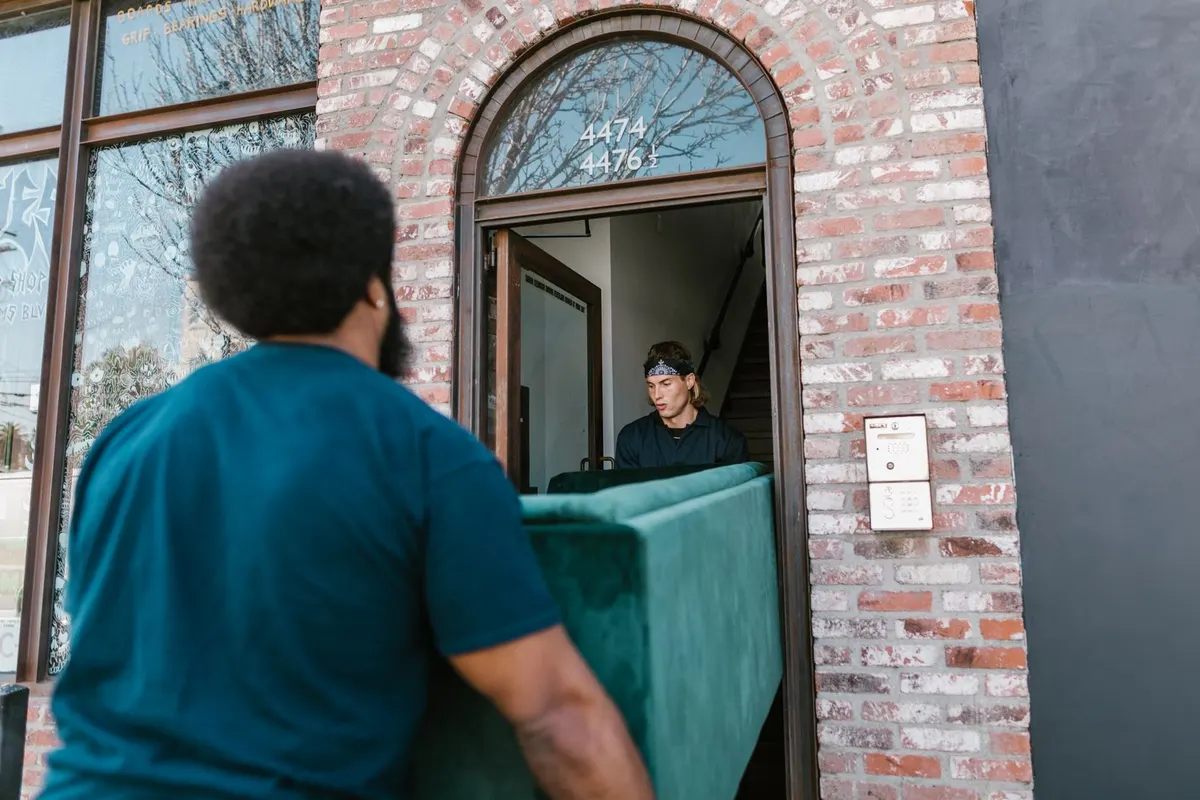
Furniture removal for an elderly resident in Dubai rarely goes wrong because of the furniture itself. A wardrobe is a wardrobe, whichever room it comes out of. What actually changes is the pace, the number of small decisions along the way, and whether the right person is the one confirming them. This guide covers what genuinely makes this kind of job different, and what to settle before the crew arrives.
The furniture is rarely the hard part
Nothing about a sofa or a sideboard becomes physically harder to lift because an older person owns it. What changes is that many items in an elderly resident's home carry a decision that goes beyond keep or go — who used it, whether someone in the family still wants it, whether the person it belongs to has actually agreed it can leave.
Rushing that decision is where a job like this actually goes wrong, not the lifting. A crew that treats it as an ordinary collection at an ordinary pace will move quickly through rooms that need a slower, more deliberate walk-through instead.
Work out who is actually deciding, before the day
In a lot of Dubai households an elderly parent lives with an adult child's family rather than alone, and the person arranging the collection is not always the person whose furniture it is. Sometimes the resident is deciding for themselves. Sometimes a family member is coordinating from another room, another emirate, or another country, and the resident is the one actually present when the crew arrives.
Settle which of those it is before you book, and tell the company directly. A booking arranged by someone who then isn't present for the actual sorting is the most common way a piece gets removed — or kept — on an assumption rather than an answer.
Sorting takes longer than it looks like it should
The slow part of this job is deciding, not lifting. A wardrobe that has held decades of belongings takes longer to go through than an identical empty one, and a chair that came from an earlier home carries a question a newer chair never has to answer.
- Break sorting into short sessions rather than one long day — decision fatigue sets in well before physical tiredness does.
- Give anything genuinely undecided its own pile, and leave it out of the collection entirely rather than forcing an answer on the spot.
- Let the resident handle anything with sentimental weight, even if someone else is managing the rest of the job.
- Write down what's been agreed as you go, once more than one room or more than one family member is involved.
Keeping the home safe while the job is happening
Even a short collection turns a room into a temporary obstacle course — boxes stacked in a walkway, a chair pulled away from where it usually sits, a rug rolled up and out from underfoot. For a resident who relies on a clear, familiar path to move around the home, that's a real fall risk for the hour or two the crew is working, not just a mess to step around.
- Keep the resident's main walking routes clear at every stage of the visit, not just once everything is finished.
- Leave any walking frame, cane or wheelchair exactly where it's expected to be, rather than moving it out of the way.
- Don't leave loose tape, cord or plastic sheeting across a floor, even temporarily between trips.
- Check in before something is carried out of a room the resident is still sitting in.

Access changes the plan, not the approach
The building itself works the same way it does for any other resident — a service lift to book in a tower, a stairwell if there isn't one, a driveway in a villa. What's worth flagging at booking is timing rather than access itself: an early, unhurried slot suits this job better than a tight one, since the entire point is not rushing the person the furniture belongs to.
What to say when you book
A few details, said up front, do most of the work of making the visit run smoothly.
- Who the point of contact is on the day, if it isn't the resident themselves.
- That the visit should run at a relaxed pace rather than a fixed short window.
- Whether the resident will stay in the room being cleared or move to another one for the duration.
- Anything with a story attached that needs a second opinion from a family member before it's carried out.
- The building's own access details — floor, lift situation, timing window — the same as for any other collection.
None of this makes the job unusual for a crew that has done it before. It simply asks for a normal collection run at a different pace, with the right person confirming each decision, and a home kept genuinely safe to move around in while it happens. Get those three things right and the rest goes the same way any other furniture collection does.