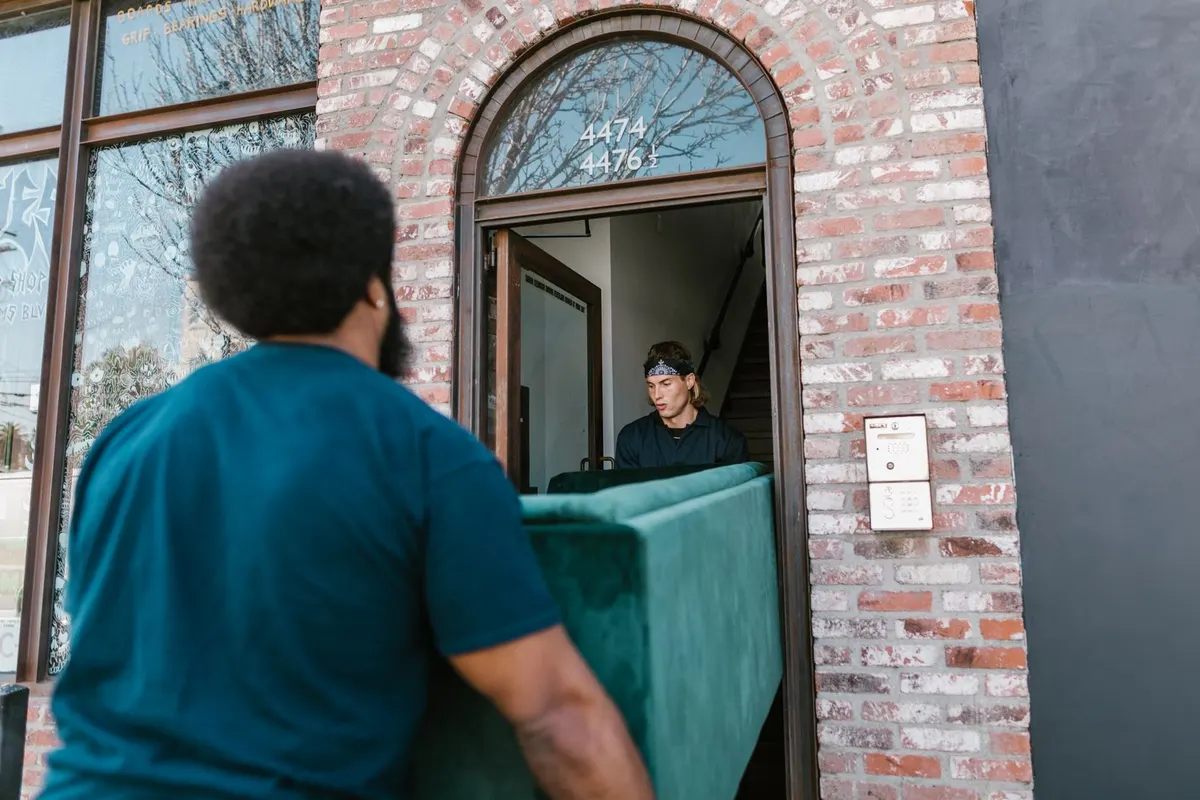
Heavy furniture removal without a lift is a stairwell problem rather than a strength problem. Whether a wardrobe or a three-seater can leave an upper-floor flat is decided by the tightest turn on the way down, and that is settled long before anyone gets their hands underneath it. This guide covers how to work out what your staircase will actually accept, what changes on the day, and what to say when you book so a crew arrives with the right number of people.
Three different problems get called “no lift”
Being told a building has no lift can mean three separate things, and they are not the same job.
- A genuine walk-up. Older low-rise buildings were built without one, so every floor has always been stairs. The route never changes, which makes this the easiest of the three to plan around.
- A lift that exists but will not take the item. Passenger cars in many towers are sized for people and shopping bags, not for a two-metre wardrobe. The lift works perfectly and is still no use to you.
- A lift you are not permitted to use for this. Plenty of buildings keep furniture out of the passenger lifts entirely and expect a service lift to be used instead — and when that service lift is out of order, under maintenance or booked out, the stairs are the only route left.
The third one catches people out, because it usually appears on the morning of the collection rather than at the point of booking. It is also the only one of the three that can be solved by moving the date.
The narrowest point decides what leaves whole
The narrowest point on the route governs everything, and it is almost never the front door. In most residential stairwells it is the half-landing, where the flight doubles back and a long item has to pivot in a space barely wider than the stairs themselves.
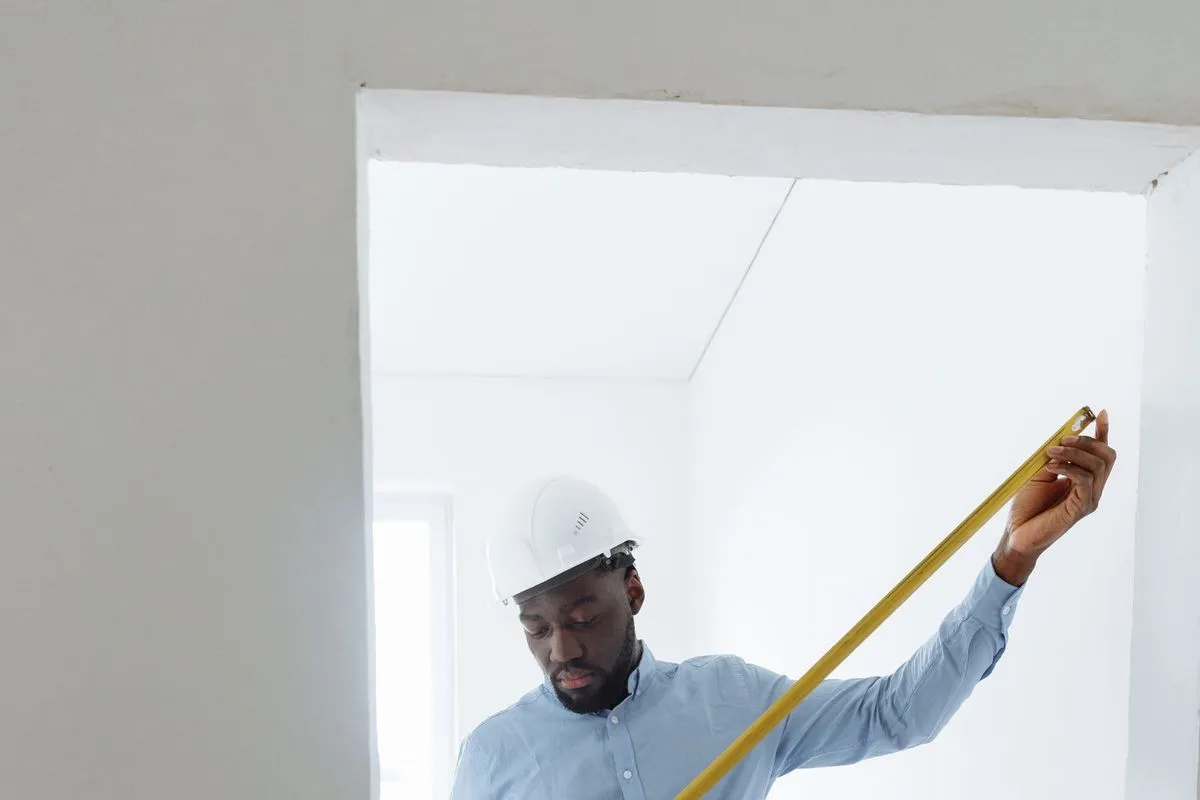
Four measurements are worth taking before the day, and none of them takes long.
- The clear width on the stairs, measured from the handrail rather than from the wall. The handrail is the real edge of the route.
- The diagonal across the half-landing, corner to corner. That is the longest thing that can turn there.
- The headroom above the turn, which is where an upended wardrobe usually stops.
- The door at the foot of the stairs, including which way it swings and whether it can be held open.
Then measure the item at its longest, widest and deepest. Furniture turns on a diagonal rather than square, so a two-metre sofa does not need two metres of landing — it needs enough diagonal to swing through. If the two numbers are close rather than comfortable, treat it as a no until somebody has stood in the stairwell and looked at it properly.
Weight decides the crew, not whether it can be done
Weight is what people worry about first and it is rarely the deciding factor. A heavy item that fits the route comes down. A light item that does not fit the route stays where it is, however many people are carrying it.
What weight genuinely changes is how many people are needed and how often they stop. On a staircase the load does not sit evenly across a carry: the person below takes most of it for the whole descent, so a piece that two people can manage on the flat often needs three once it is going down. That is a sizing decision, not a technique one.
The awkward items are the ones with nothing to hold. A mattress is not heavy for two people and is still among the hardest things to bring down a stairwell, because it folds in the middle and offers no grip. A stone-topped table is the opposite: easy to hold, heavy enough that the top and the base travel separately.
When it makes sense to take the item apart
A stairwell is one of the few genuinely good reasons to dismantle furniture rather than carry it whole. Most of the time taking something apart adds work without changing the outcome. Here it is often the difference between the item leaving and the item staying.
The question worth asking is not whether a piece can be dismantled, but whether dismantling it changes the largest dimension. Taking the doors off a wardrobe changes very little, because the carcass is still the same size and shape. Taking the carcass down to flat panels changes everything, because a panel turns a half-landing that a box never will.
Some things do not come apart usefully at all: a one-piece stone or glass top, a moulded plastic unit, a corner sofa built on a single bolted frame. When the largest remaining piece is still bigger than the tightest point of the route, that is the answer, and no amount of planning changes it. There is no clever third option — furniture leaves through the door and down the stairs, or it comes apart first.
How a stairs-only collection actually runs
A stairs-only job is organised around trips rather than around lifting, which is why the sequence matters more than the effort.
- The whole route is walked first, from the item to wherever the vehicle can stop, so the tight points are known before anything is picked up.
- Doors along the route are propped or wedged open. A door swinging shut mid-carry is the most common cause of a marked wall.
- Small and loose things go down first. That clears the landings and gives the heavy items somewhere to be set down.
- Large items come down in relays to a staging point at ground level, rather than each one being carried the entire way to the vehicle.
- Loading happens last, in one run, once everything is down and the stairs are clear.
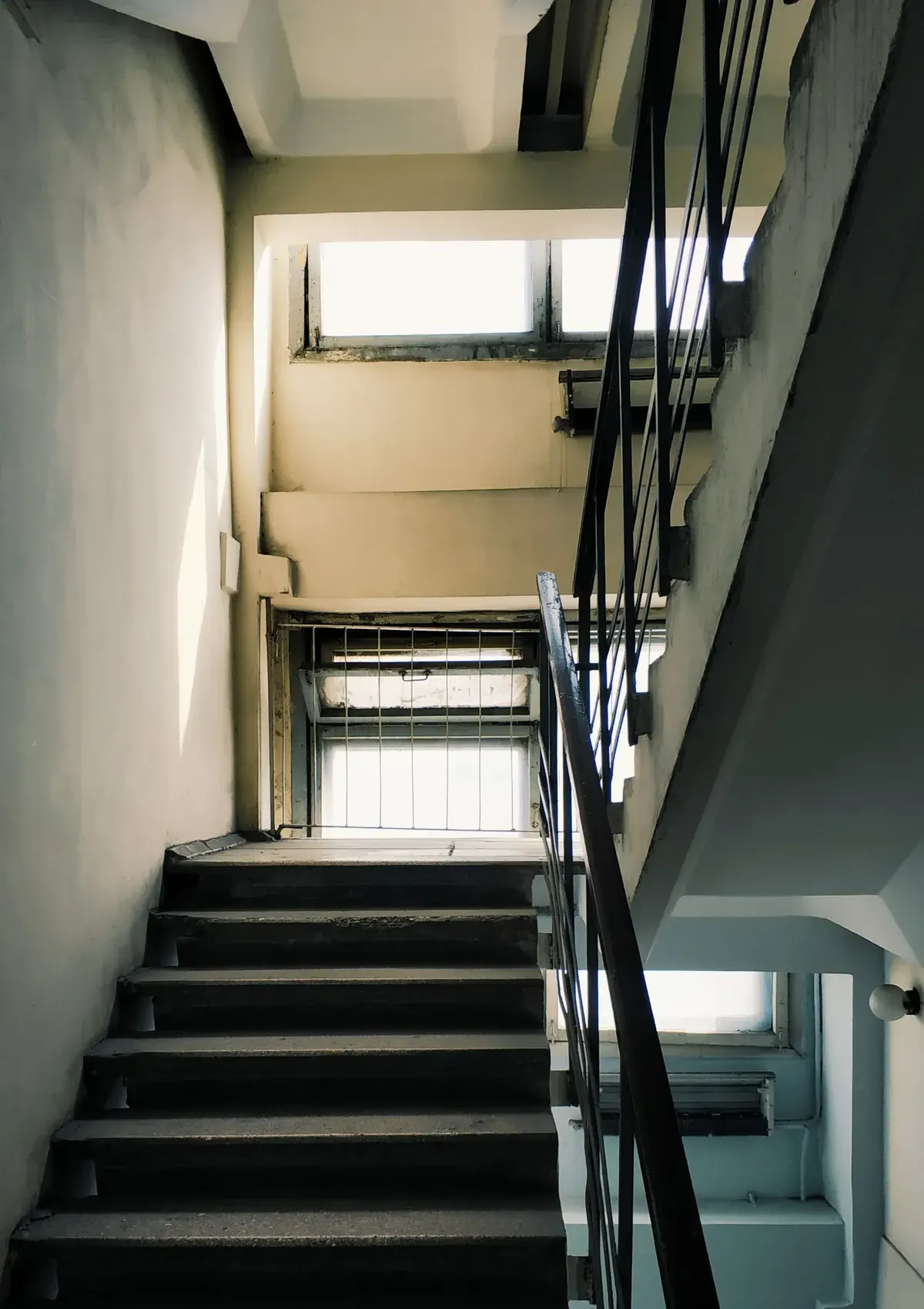
Protection is worth concentrating rather than spreading. The corners and handrails at the two tightest turns take nearly all the wear, so padding those is worth more than wrapping the whole route.
The stairwell is the hottest part of the building
Residential stair cores here are usually unconditioned and kept closed, with no air moving through them. Through the summer a stairwell can be noticeably hotter than both the flat above it and the street outside, and it is the one part of the route with no relief anywhere along it.
That changes the schedule more than it changes the method. An early slot is genuinely better for a stairs job than a midday one, more people beats more effort, and rests need to be planned rather than taken when somebody is already struggling. Water at the bottom of the stairs is a small thing that makes a real difference on a four-flight carry.
Booking heavy furniture removal without a lift
Say all of this when you ask for a price, not when the crew arrives. Five details cover it.
- The floor number, and whether there is no lift at all or one you are not able to use.
- How many flights, and whether the stairs run straight or double back at a half-landing.
- The largest item, with real measurements rather than a description.
- Whether anything is already dismantled, or can be before the day.
- What the ground floor gives onto — a door straight to the kerb, or a lobby and a walk to wherever a vehicle can legitimately stop.
A crew sized for a lift job and sent to a fourth-floor walk-up is the most common reason a collection overruns its slot, and it is entirely avoidable. Describing the stairs honestly usually costs a little more on the quote and saves the visit.
Nearly every no-lift job that goes badly goes badly for the same reason: the route was measured after the item was already on the landing. A tape measure, an honest description at booking, and a willingness to take a wardrobe apart in the bedroom rather than argue with it on the turn will settle almost all of it. Stairs make a collection slower and more expensive. They only rarely make it impossible.