Managing residential rental portfolios across Dubai—whether multi-unit towers in Dubai Marina, holiday-home apartments in Downtown Dubai, or family villas in Jumeirah Village Circle—regularly involves updating aging white goods. When leases conclude or property managers schedule portfolio-wide refreshes, coordinating bulk appliance disposal becomes an operational priority. Discarding dozens of mismatched refrigerators, washing machines, and cooking ranges requires methodical building coordination, utility isolation, and rapid haulage to minimize vacant rental days.
Portfolio turnovers: single replacements versus batch haulage
Replacing appliances piecemeal as individual units fail between tenancy agreements generates repeated administrative friction. Property owners face multiple service callouts, recurring lift booking requests, and fragmented delivery fees. In contrast, batching appliance replacements across multiple units creates substantial operational efficiencies:
- Reduced administrative overhead: Submitting a single building management permit (NOC) and securing one dedicated service elevator window rather than repeating approvals across successive weeks.
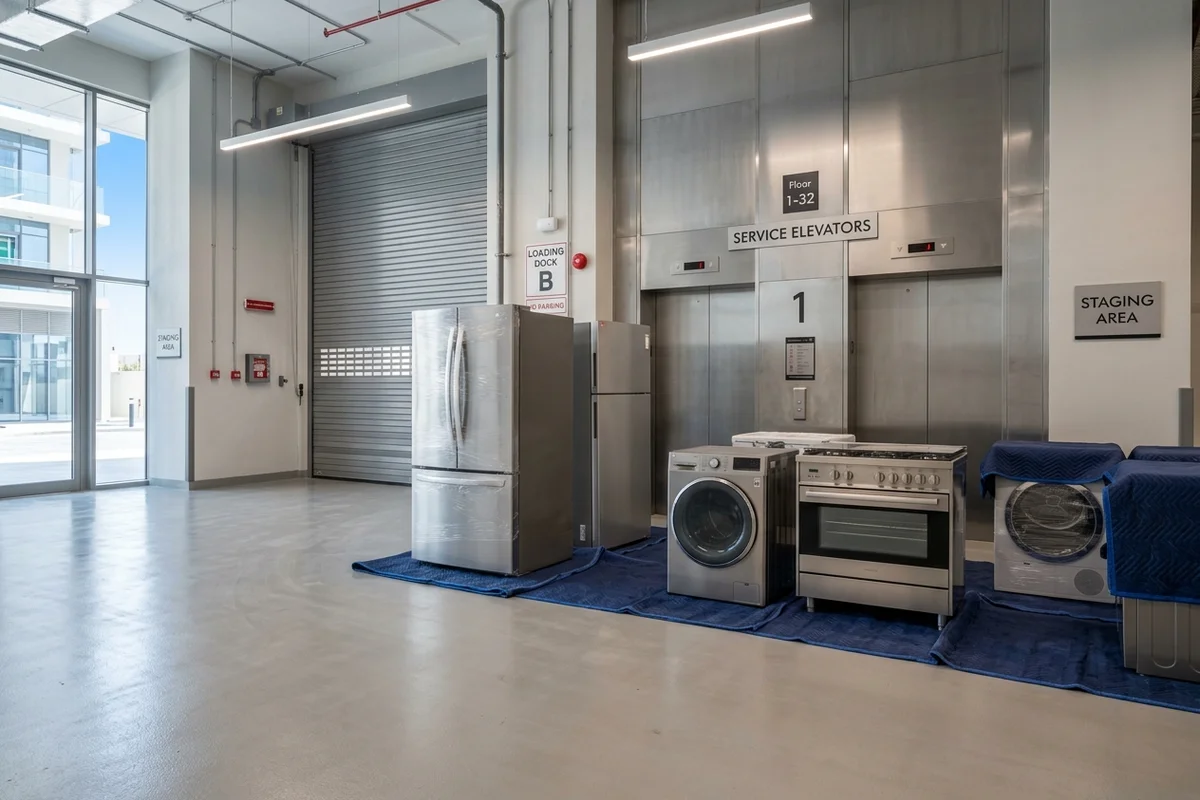
- Consolidated logistics: Staging units systematically in designated loading bays, enabling a removal crew to load multiple apartments in a single continuous vehicle cycle.
- Minimised rental downtime: Completing appliance removal and new installations within a narrow 24-hour turnaround window before incoming tenants collect their keys.
- Economical vehicle allocation: Replacing scattered piecemeal haulage charges with efficient truckload logistics.
Building management permits and service lift logistics
Dubai residential towers enforce strict facilities management guidelines governing bulky equipment movements. Removing heavy appliances requires securing an official move-out or contractor permit (No Objection Certificate) through the building's online portal or management office prior to collection day.
Landlords and property supervisors must reserve the dedicated service elevator for a defined time block. Service lifts feature padded protective drapes and direct access to basement loading bays, shielding standard passenger elevators and decorated residential lobbies from heavy steel chassis corners and trolley wheels.
Utility isolation and water containment across rental units
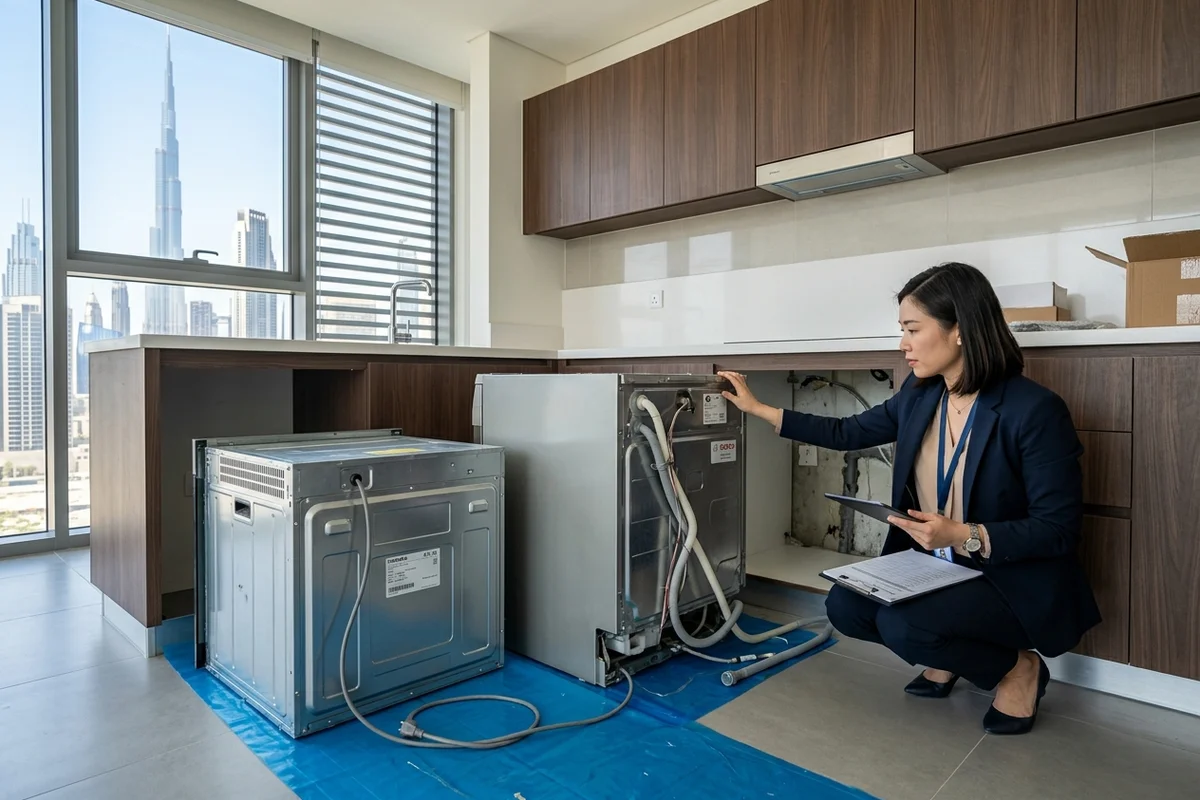
Before removal teams move heavy appliances out of individual apartments, landlords must verify that all electrical, plumbing, and gas connections have been properly isolated:
- Electrical breakers: Switching off dedicated 32A/45A cooker circuits and general kitchen socket breakers on each unit's electrical distribution board.
- Plumbing stop valves: Tightening quarter-turn angle valves feeding washing machines and dishwashers, followed by draining residual water from pump filter traps to prevent corridor spills.
- Gas supplies: Shutting central manifold valves or safely closing LPG bottle regulators prior to unscrewing flexible copper or rubber hoses.
- Refrigerator defrosting: Powering down cooling units at least 24 hours prior to collection to eliminate interior frost and condensation meltwater.
Consolidated haulage: shortening turnover vacancy windows
Every day an apartment sits empty awaiting maintenance or debris clearance represents lost rental yield. Staging all removed units in a garage, utility bay, or freight holding corridor enables single-trip bulk hauling that clears properties promptly.
Once the old appliances are loaded, flooring and cabinetry cavities become immediately accessible for deep cleaning teams and painting contractors. Fit-out specialists can then install new energy-efficient appliances without negotiating around discarded hardware.
Responsible e-waste recycling and disposal documentation
Institutional landlords, corporate property managers, and holiday-home operators require clear audit documentation demonstrating responsible waste governance. Unregulated disposal or dumping beside communal bins risks municipal penalties and reputational harm.
Professional removal providers route decommissioned appliances to licensed UAE recycling facilities. Specialized processors evacuate refrigerants from compressor circuits, shred steel and aluminum casings, and recover copper motor windings under regulated environmental standards.