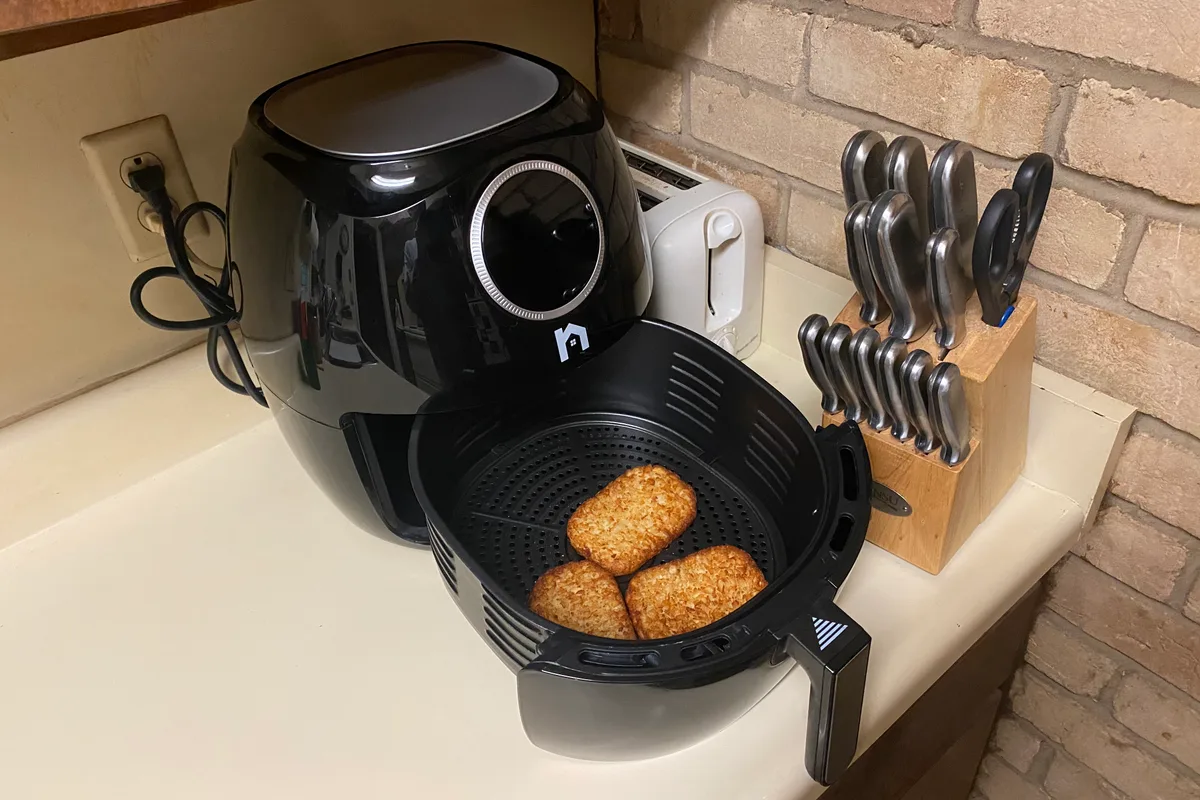
An air fryer is not the same disposal item as a kettle. It separates into pieces that are not electronics at all, it leaves the kitchen with cooked-on fat inside it, and the larger models are no longer small enough to drop into a carton with the rest of the countertop clutter. The same is true of most of the current generation of countertop cookers — multi-cookers, air fryer ovens, indoor grills — which is why they are worth handling as their own group when a kitchen is cleared.
Take the non-electronic parts off first
Only the powered base is electrical waste. Most of what lifts out of an air fryer or a multi-cooker is not, and separating it takes about a minute per machine.
- The basket, drawer and crisper plate, usually coated metal or coated plastic.
- A ceramic or coated inner pot from a multi-cooker, rice cooker or slow cooker.
- Glass lids, glass bowls and the glass drum of an air fryer oven.
- Silicone sealing rings and gaskets from a pressure cooker lid.
- Wire racks, skewers, baking tins and any accessory that has never had a cable attached to it.
Where a machine is being scrapped, bin the disposable pieces with general waste, pack the glass so it cannot break loose in transit, and let only the base travel with the electronics. Where it is being passed on, do the opposite and keep the set intact — a multi-cooker missing its inner pot is close to worthless to whoever receives it.
Degrease it, and let it cool completely first
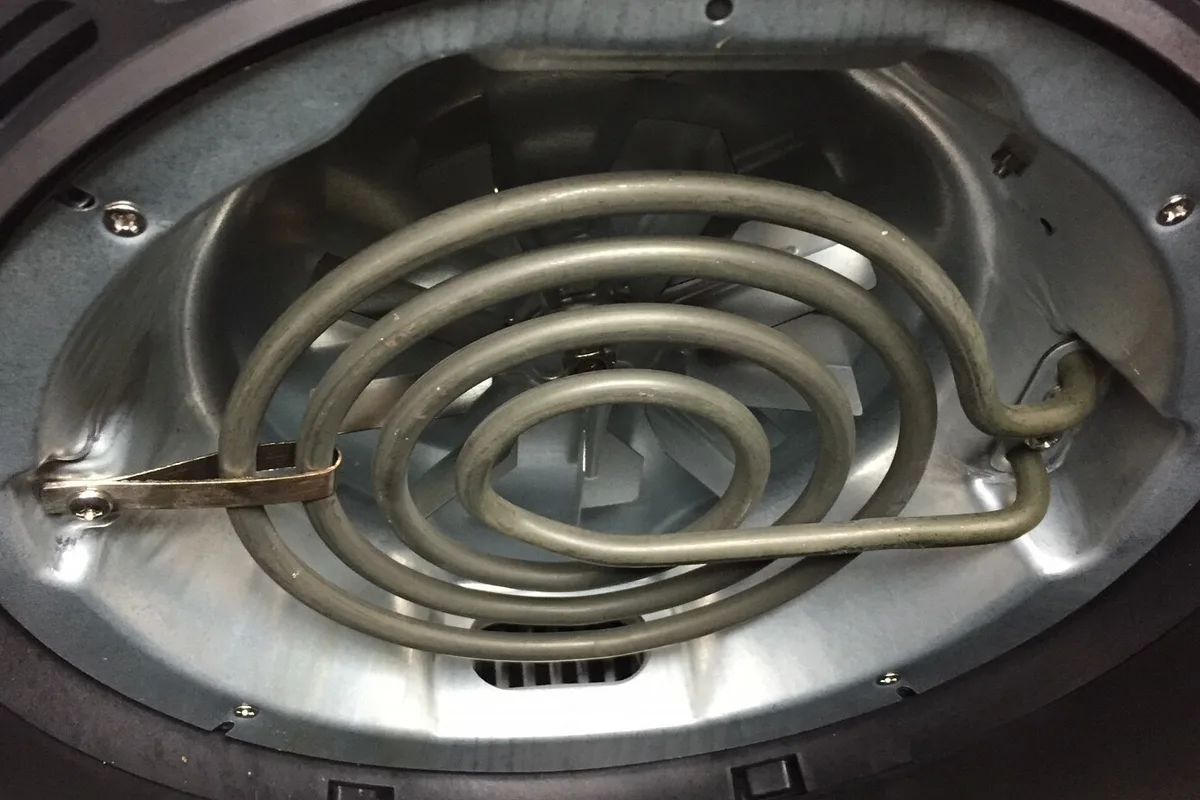
This is the one job worth doing on a fryer or a grill that you would skip on a toaster. Cooked-on grease sits around the element and the fan housing, and in a warm store room or a car boot it turns rancid, smells and attracts pests. A machine that has been wiped out is also far more likely to be accepted by a charity or a buyer.
Wait until the unit is completely cold, wipe the interior and the element housing, and drain any collected oil into a sealed container that goes into general waste. Cooking oil should never go down a kitchen sink or a floor drain — it sets in the trap and in the building's waste stack, and a blockage in a tower is a considerably larger problem than an old air fryer.
A worn coating is a reason to retire it, not to pass it on
The coating usually ends an air fryer basket long before the motor or the element gives up. Discolouration and staining are cosmetic. Flaking, scoring down to bare metal, or a surface that has started to lift at the edges is not, and a basket in that condition should not be sold or donated for cooking use even if the machine still runs perfectly.
Where the base is sound and only the basket is worn, it is worth checking whether a replacement basket is still sold for that model before deciding the whole unit is finished. Often it is not finished at all — which is a better outcome than either recycling or passing on a machine somebody cannot safely use.
Some of these are no longer small appliances
Advice about grouping countertop gadgets into one box works for kettles, toasters and hand blenders. It stops working at a certain size, and several popular machines have crossed that line in the last few years.
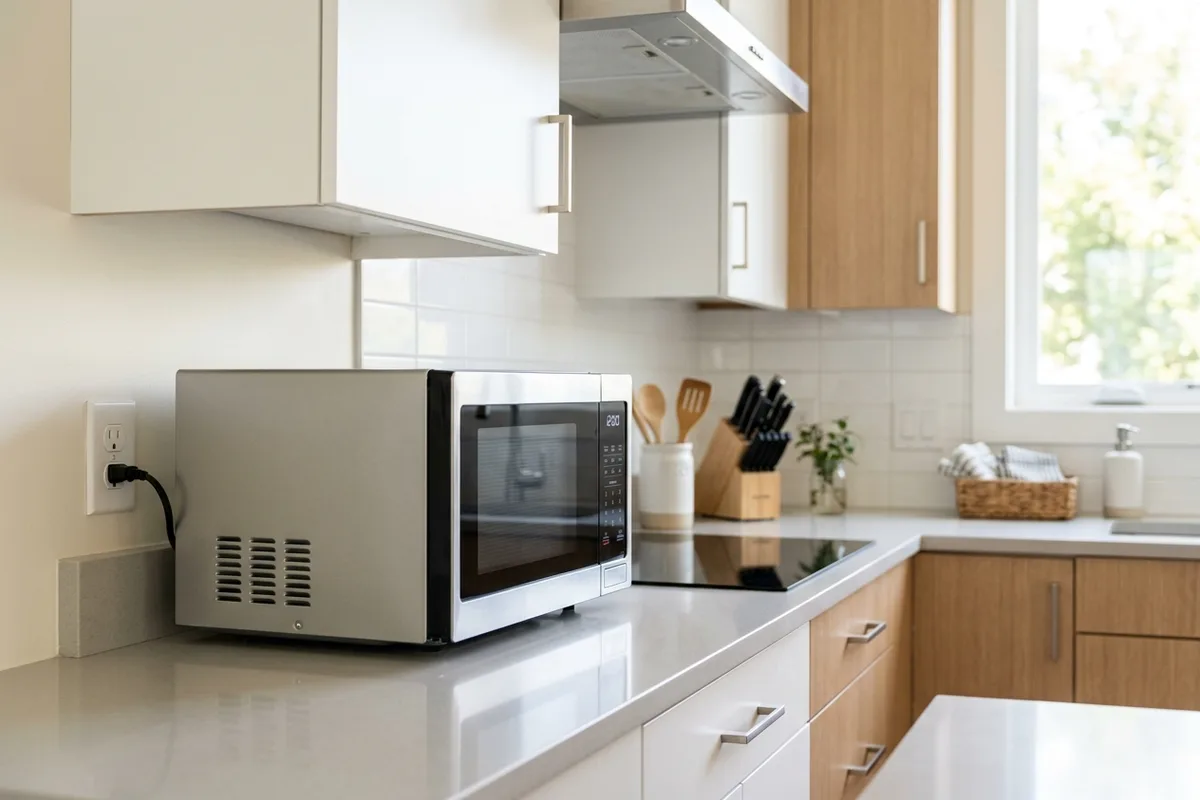
- Dual-basket and family-size air fryers, often as deep as a microwave.
- Air fryer ovens and countertop combination ovens, the largest of the group.
- Electric pressure cookers and large multi-cookers, particularly with the inner pot left in place.
- Stand mixers, which are compact but dense enough to fail a cardboard box.
Check the footprint of anything you are unsure about before assuming it will bundle. When you book, say how many sealed boxes there are and how many loose units, rather than describing the lot as a few kitchen gadgets — the difference decides whether this is an add-on to an existing collection or a job of its own.
Work through the cupboard once, not gadget by gadget
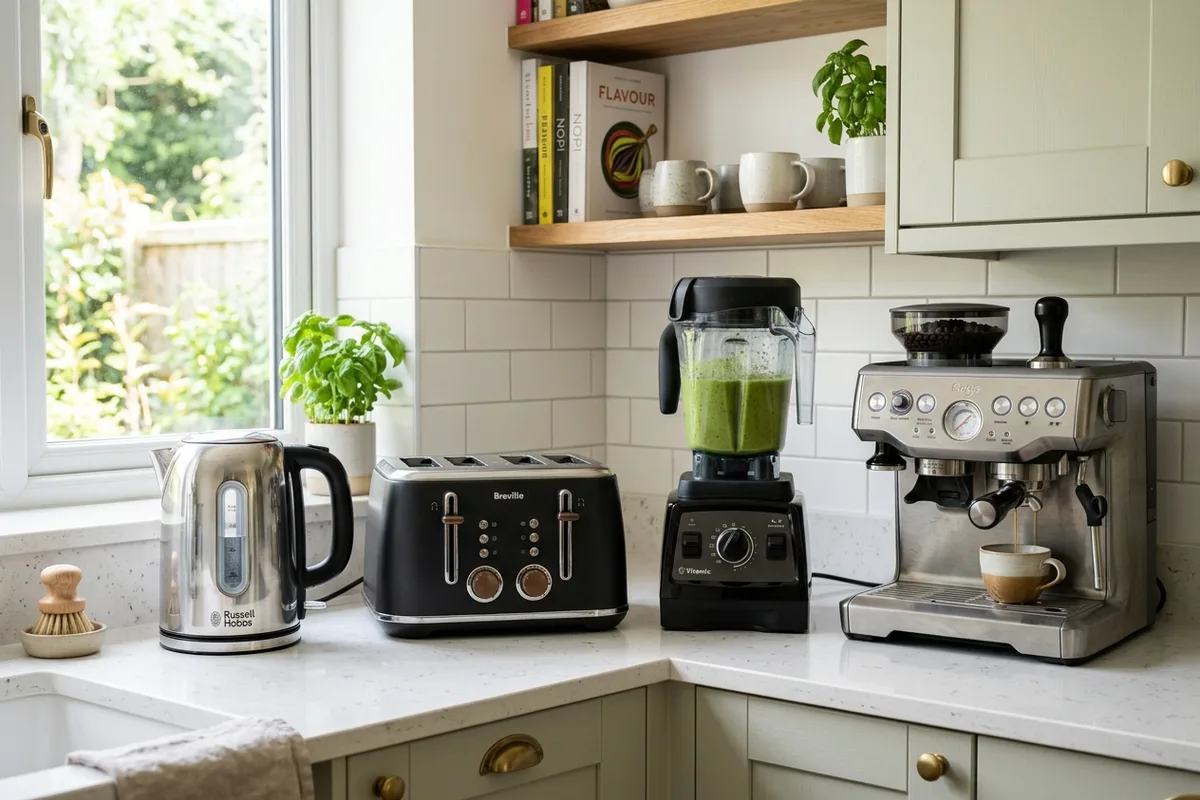
Kitchen gadgets accumulate quietly: the sandwich press behind the pans, the second blender, the yoghurt maker used twice in 2021. Pull the whole appliance cupboard out in one go and sort it in a single pass, because the alternative is finding three more units a week after the collection has left.
- Does it power on?
- Are all of its parts present — lid, jug, basket, blade, adapter?
- Would you be comfortable handing it to someone you know?
Three yes answers make it a resale or donation candidate. Anything less goes on the electronics pile, and it is worth being unsentimental at this point: a gadget that has sat unused in a cupboard for two years is not about to be used next month.
Listing them for collection
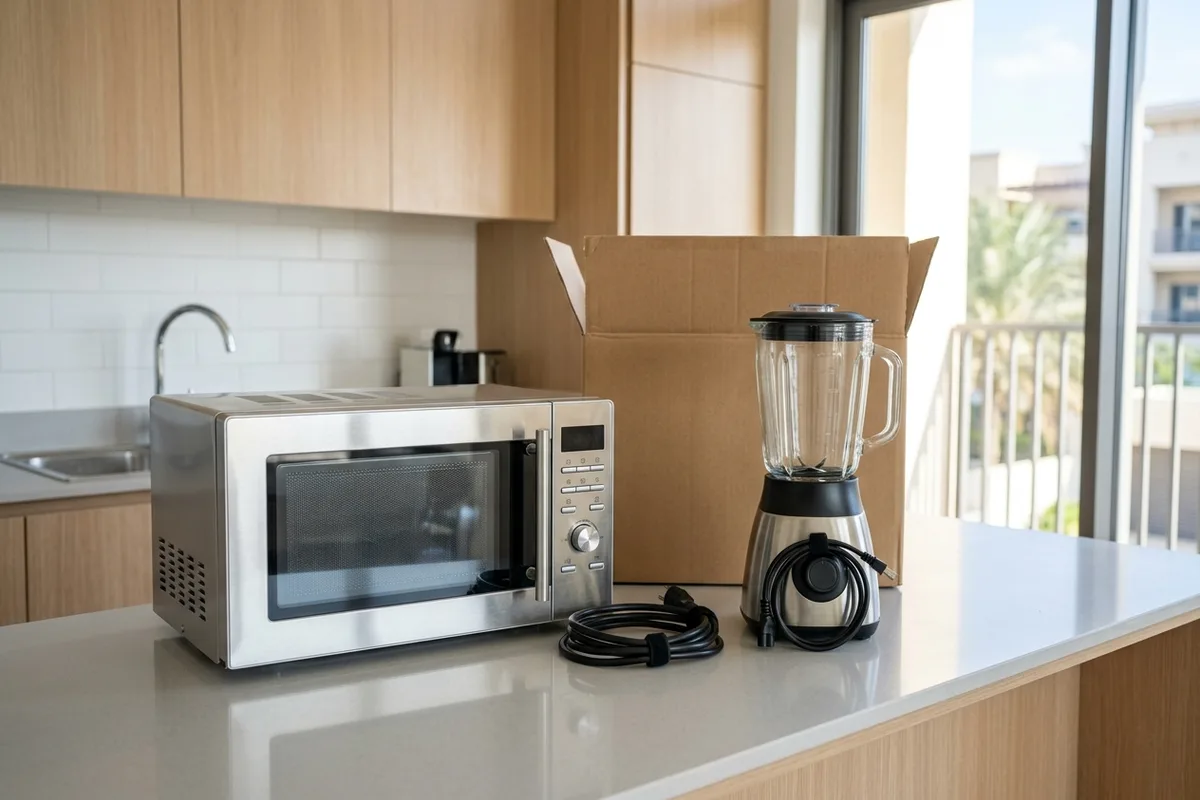
Count the units, name the two or three largest, flag anything oversized, and mention if any machine still has oil in it so it can be carried upright. A photograph of the group on a counter answers most of the remaining questions in one go, and it is quicker than writing the list out.
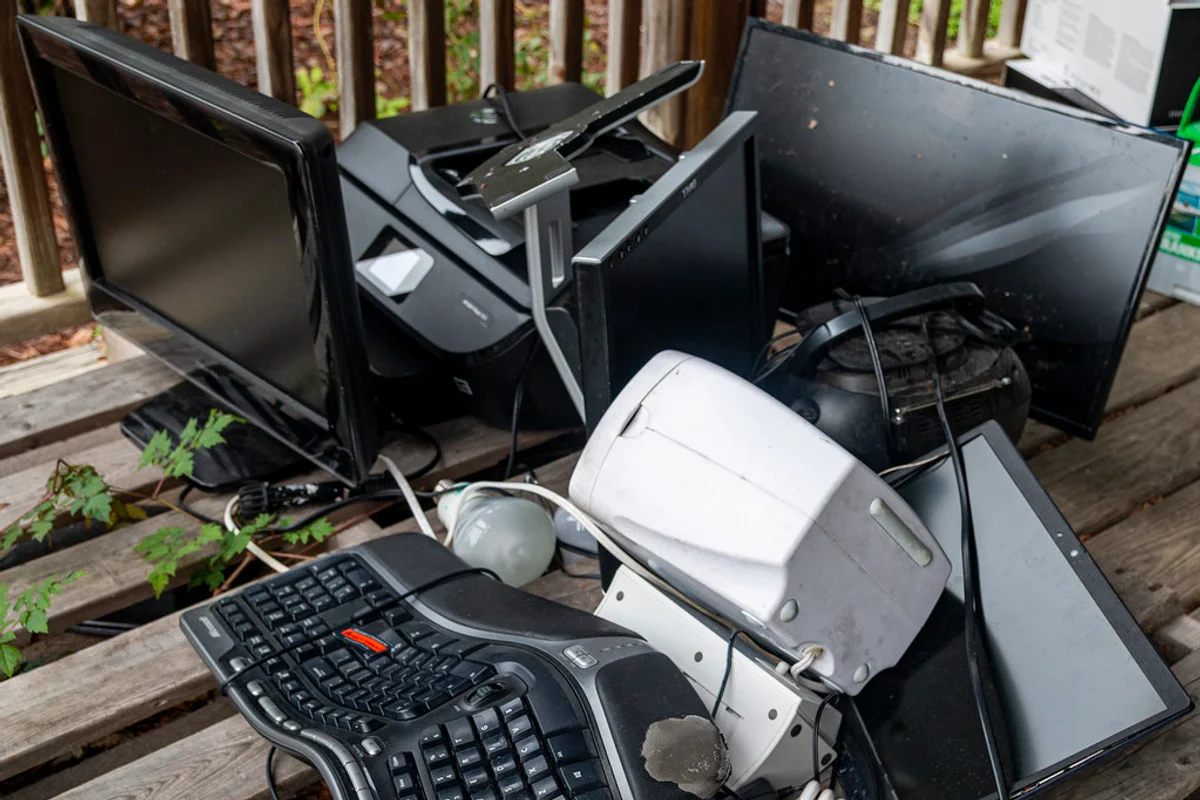
Handled this way, an appliance cupboard that has been quietly filling for years comes apart in an afternoon: a short pile of glass and coated parts for the bin, a smaller pile of complete working machines worth passing on, and one box of powered bases going where electronics are supposed to go.