Junk removal works like this: a crew arrives with a vehicle sized to the job, carries your unwanted items out by hand, builds them into a load, and takes that load away to be separated for reuse, recycling or disposal. Booking it is the part most people already understand. This guide covers the part nobody sees — what the crew does once it is inside your home, how a load is put together, and what happens to your things after the vehicle pulls away.
What happens on the day, in order
Once the collection is booked and building access is arranged, the physical job runs in roughly the same order every time. The order is not arbitrary — each step exists because doing it later costs time.
- The crew walks the job with you and agrees exactly what is going. This one conversation prevents almost every mistake that follows.
- Protection goes down wherever the route needs it — lift interiors, shared corridors, door frames and polished floors.
- The large, rigid pieces come out first, while the route is still clear and nobody is stepping over bags to reach them.
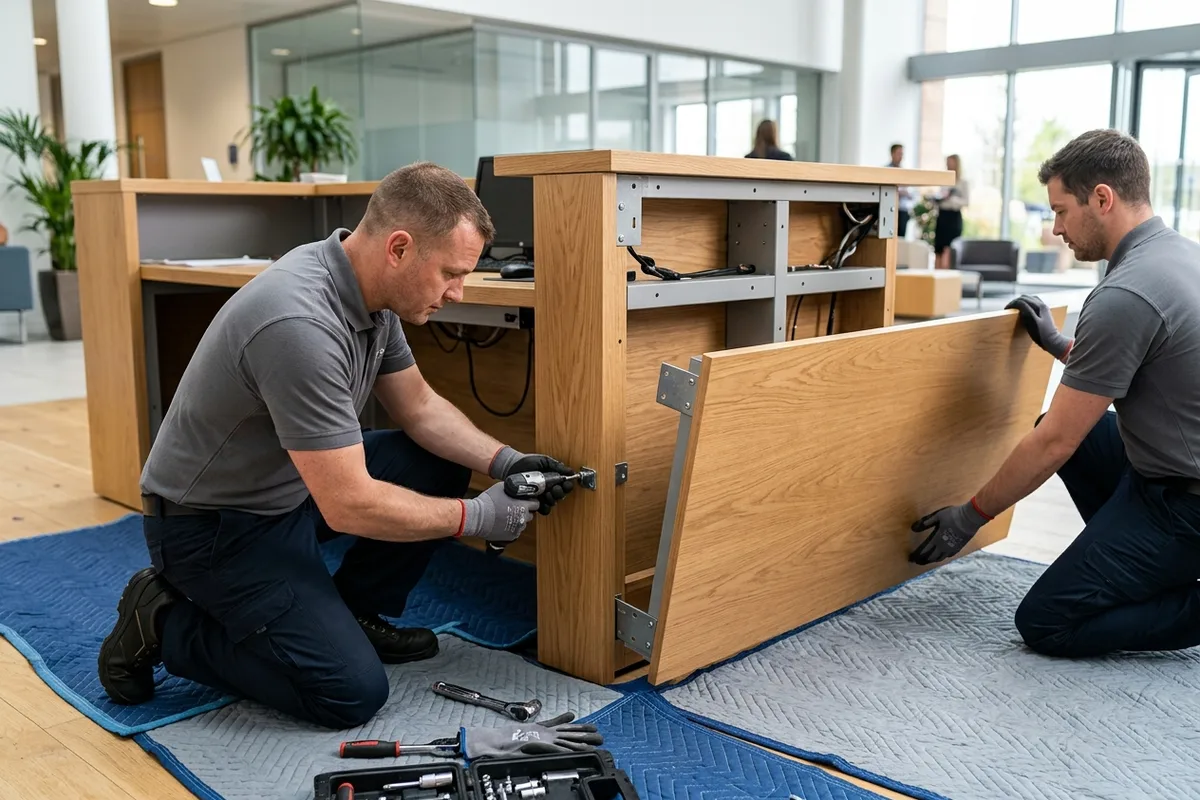
- Anything wider than a doorway is taken apart where it stands, which is why crews carry basic tools rather than hoping for the best.
- The load is built in the vehicle piece by piece as it arrives, not thrown in and squared up afterwards.
- A final walk-through confirms that nothing meant to stay has ended up on the truck.
Your own part is short. Point at what is going, say clearly what is staying, and stay reachable until the vehicle leaves.
Who turns up, and what they bring
A standard household collection is handled by two people, often including the driver. Crew size is decided by the route out of the building rather than by the size of the pile.
That catches people out. Twenty items on a villa ground floor with a driveway outside can be a comfortable two-person job. Six items on the eleventh floor of a tower, with one service lift shared by the whole building, may need three — because the limit is how many lift trips are possible inside the booked window, not how much there is to carry.

The crew also brings equipment, and that is a real part of what a collection buys you:
- Lifting straps and a sack trolley for anything that cannot be carried comfortably between two people.
- Blankets and covers to protect lift interiors, corridors and door frames on the way out.
- Basic hand tools — screwdrivers, spanners, an allen key set — for taking furniture apart.
- Bags and sheeting for loose material, so a room leaves in a few movements rather than in armfuls.
- Gloves and closed boots, because almost everything being thrown out has an edge, a screw or a broken corner somewhere.
How a load is actually built
A load goes into the vehicle in a deliberate order, and that order decides whether everything fits in one trip.
- Heavy, rigid pieces go in first, against the front wall of the cargo area, where they sit flat and put the weight over the axle.
- Flat items stand upright along the sides — table tops, wardrobe panels, headboards, doors. This is why a dismantled wardrobe takes far less space than an assembled one.
- Soft material fills the gaps between the rigid pieces: mattresses, cushions, bedding, bagged clothing and packaging.
- Small and loose items go in last, bagged or boxed, so nothing works its way free in transit.
- Anything travelling on a separate disposal route stays where it can still be reached, rather than being buried at the back.
A load packed this way holds noticeably more than the same items thrown in loose. It also explains something that can look like reluctance on the day: a crew may ask you to hold a late addition until there is a sensible place for it, because slotting an item in at the wrong moment can cost more space than the item itself takes up.
What the crew does, and what it doesn't
A junk removal crew carries, dismantles, loads and takes away. It does not do trade work, and knowing where that line sits saves an awkward conversation on the day.
- Carrying items out from wherever they sit, including upstairs rooms, balconies and storerooms.
- Taking apart furniture that will not fit through a doorway in one piece.
- Sweeping the footprint the items leave behind, so the space is usable again.
- Loading, securing and removing the load, and dealing with what is in it afterwards.
What sits outside the job is anything connected to the building's plumbing, wiring or structure. A plumbed-in washing machine or dishwasher, a wall-mounted air conditioner, a fixed water heater and built-in kitchen or wardrobe joinery all need someone qualified to disconnect or remove them first. Once a unit is free and standing on the floor, a crew will take it away without a second thought. Getting it free is a different trade.
Deep cleaning is separate too. Sweeping up after a clear-out is normal and expected; scrubbing a property for handover is a different service with different people and different equipment.
Where the load goes after it leaves
A mixed household load is separated into streams before any of it is disposed of, and that separation happens in stages rather than all at once.
- In the room, as items come out. Anything clearly still usable is set aside and handled carefully rather than stacked in with what is already broken.
- At the vehicle, as the load is built. Items with their own handling route are kept together and apart from the general load.
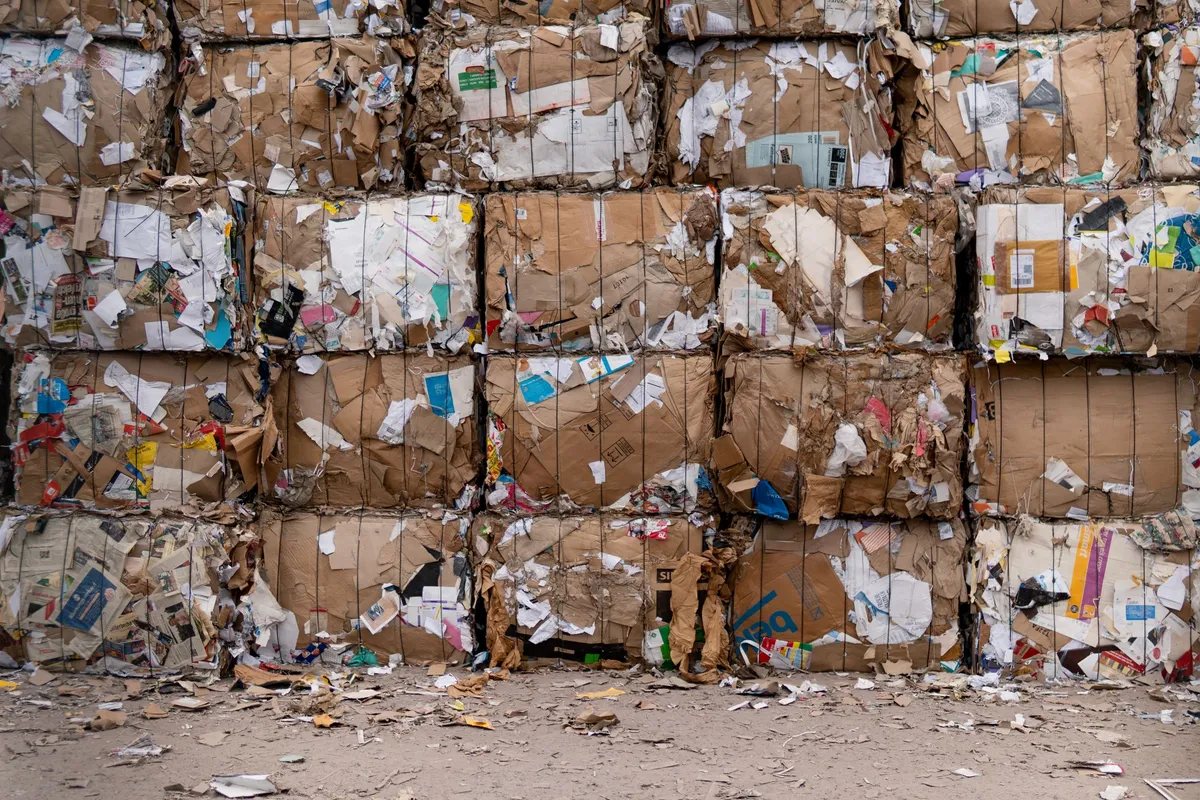
- After the vehicle leaves, where what remains is broken down into the materials it is actually made of — metal, timber, cardboard and certain plastics.
Sorting is practical as much as it is responsible. Separated material has somewhere to go; a mixed load has only one destination. That is the difference between a company with a disposal process and one that treats every collection as a single problem to make disappear.
It is also why the description you give when booking still matters after the truck has gone. A load that turns out to contain something nobody mentioned has to be pulled apart and sorted again, and that is time nobody priced for.
What this means when you book
Almost everything that goes wrong on a collection day traces back to a detail the crew did not have: a room nobody mentioned, an item that needed its own route, a lift that was never reserved. None of those are hard problems when they are known in advance, and all of them are expensive when they are discovered with half a load already on the pavement.
So the useful preparation is not tidying. It is describing the job honestly — every room involved, the floor you are on, the heavy things, and anything that is not ordinary furniture. Do that and the rest of it genuinely is somebody else's problem: a walk-through, a protected route, big things first, a load built in the right order, and a sort that starts in your hallway and finishes long after the vehicle has gone.