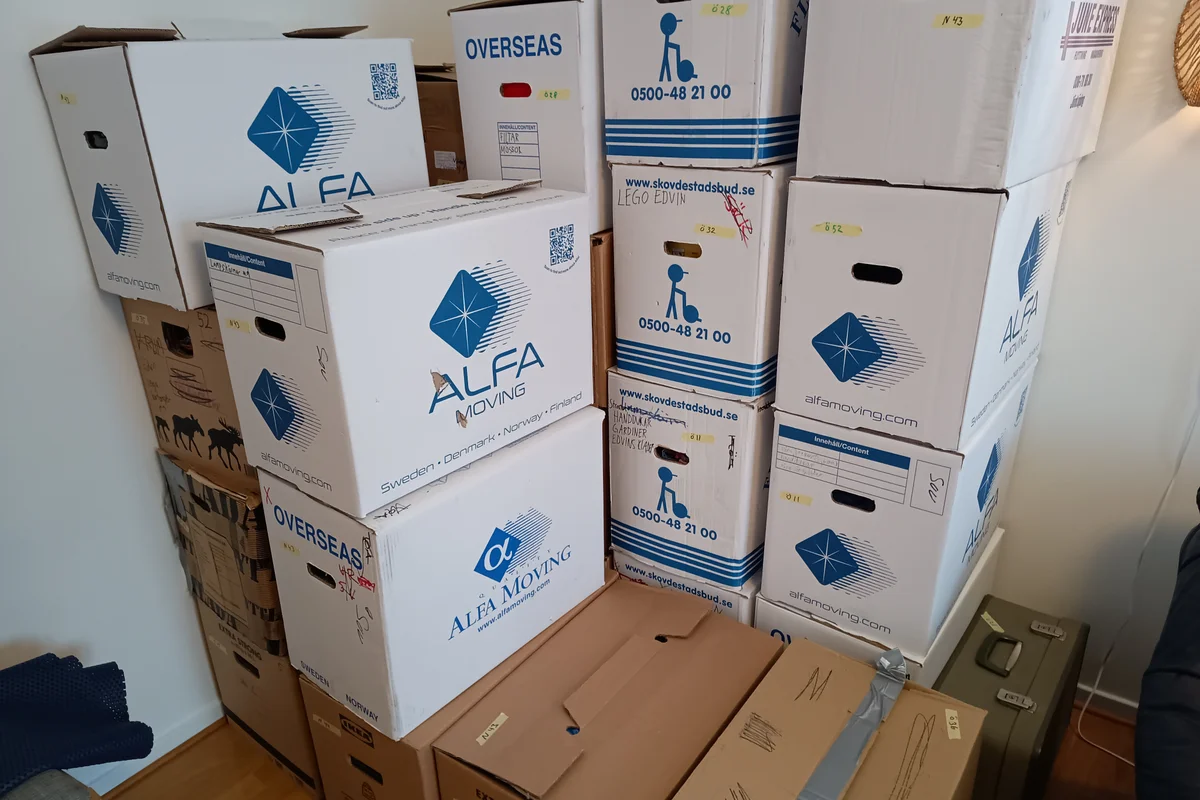
Ending a joint tenancy or dissolving a shared household in Dubai brings complex logistical demands. Beyond personal transitions, departing occupants face the practical reality of vacating a shared villa or apartment, dividing accumulated belongings, and restoring the property to pass inspection. When a relationship ends, clearing a shared home is rarely just about heavy lifting; it is about preventing miscommunication, protecting retained possessions, and executing an orderly removal without on-site friction.
A professional house clearance service operates strictly on agreed logistical instructions. Removal crews cannot make legal determinations, interpret personal agreements, or resolve disputes over who purchased a particular item. Successful separation clearances rely on clear pre-collection division, explicit visual tagging, and disciplined scheduling. This guide details practical protocols for managing a separation house clearance in Dubai smoothly and neutrally.
Establish an agreed inventory before booking clearance
The primary source of disruption during a separation clear-out occurs when clearance teams arrive while decisions about specific items remain unsettled. Once a removal crew enters a residence, their operational objective is to disassemble, extract, and load items rapidly to meet scheduled building access windows. Expecting workers to wait while occupants debate ownership of furniture or decorative pieces causes delays and risks accidental removal.
Before contacting a clearance company, both parties should compile a comprehensive room-by-room inventory divided into three unambiguous categories:
- Retained items for Party A: specific furniture, electronics, and personal belongings designated for immediate relocation or separate storage.
- Retained items for Party B: pieces allocated to the second occupant, clearly identified with serial details or room locations.
- Surplus clearance volume: redundant furniture, obsolete white goods, unwanted decorative items, and general household clutter designated for removal and disposal.
Certain domestic categories frequently generate friction if left undefined. High-value joint purchases, custom-fitted shelving, outdoor garden furniture sets, home gym setups, and shared appliances like American-style refrigerators require explicit written agreement. When consensus on a specific item cannot be reached before collection day, the safest operational decision is to move that piece to independent temporary storage rather than leaving it in the clearance path.
Physical tagging protocols: color coding and room zoning
Relying on verbal instructions or memory during a whole-home clearance invites errors. In the rush of moving day, a worker instructed to clear the guest bedroom may mistake retained heirlooms for surplus items if boundaries are indistinct. Clear physical markings provide an indisputable guide for the removal team.
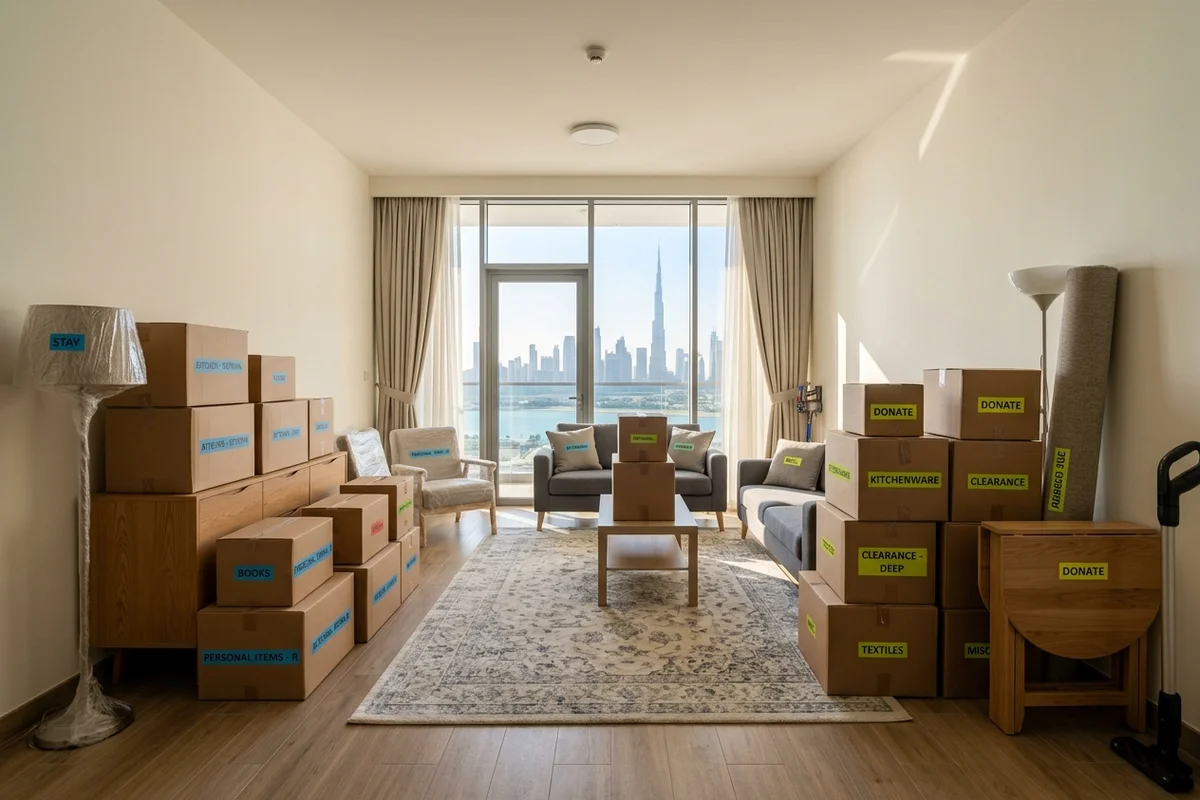
Implement a two-color tagging system throughout every room of the property at least 24 hours prior to the scheduled collection:
- Green labels or tape for retained goods: applied to every item, carton, and furniture piece that must remain untouched or will be collected by private movers.
- Red or bright yellow labels for clearance: affixed conspicuously to every item, disassembled panel, and discard carton intended for the clearance truck.
- Secure room zoning: whenever possible, designate one room (such as a lockable master bedroom or study) as a dedicated safe room. Move all retained personal files, jewellery, electronics, and sensitive documents inside and lock the door.
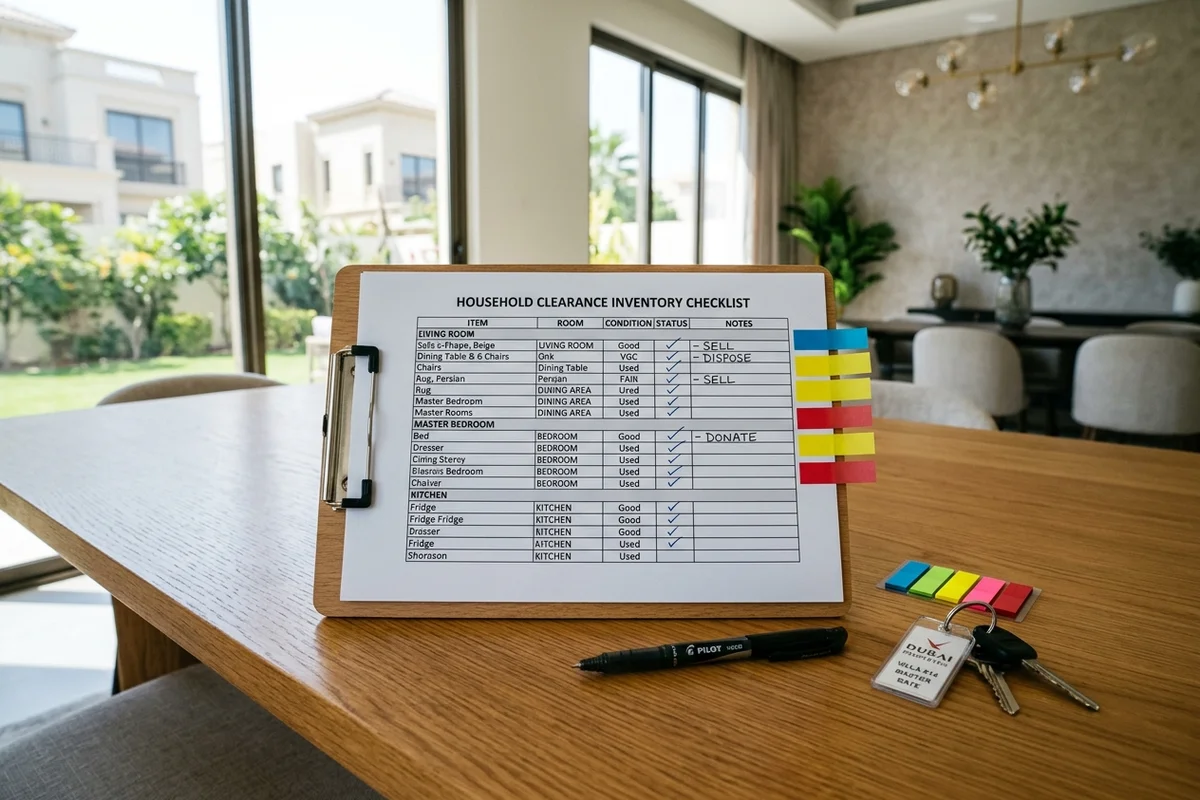
Once tagging is complete, conduct a continuous smartphone video walkthrough of the entire property. Record close-ups of tagged items while narrating the agreed plan, and share the video link mutually between both parties and the clearance supervisor. This objective visual record establishes clarity and protects all participants from misunderstandings.
Sequencing the move-out: separate collection windows
Attempting to run domestic relocation and whole-property clearance concurrently within the same physical space creates confusion. When two different moving companies and a clearance crew operate inside a Dubai villa simultaneously, hallways bottleneck, items get mixed between trucks, and access corridors become hazardous.
The most effective logistical strategy uses a linear, staged schedule across 48 to 72 hours:
- Stage 1 — Primary occupant extraction: Party A's relocation movers arrive to pack and extract their allocated retained possessions, vacating their designated rooms completely.
- Stage 2 — Secondary occupant extraction: Party B's relocation movers arrive during a separate morning window to load the remaining retained items.
- Stage 3 — Whole-property clearance: with all retained property safely evacuated from the residence, the clearance crew arrives to clear every remaining piece of unwanted furniture, broken appliance, and accumulated refuse.
- Stage 4 — Handover inspection and tenancy cleaning: the property stands empty, allowing final tenancy deep cleaning and landlord walkthroughs without obstruction.
In gated communities across Dubai (such as Arabian Ranches, Dubai Hills, or Palm Jumeirah) and high-rise towers in Downtown or Dubai Marina, each vehicle movement requires community security gate passes or building management move-out NOCs (No Objection Certificates). Coordinating separate time slots ensures each transporter has dedicated service elevator reservations and loading bay access.
Fitted fixtures, landlord inclusions, and security deposit protection
When vacating a rented Dubai property following a separation, protecting the tenancy security deposit is a shared financial priority. Standard Ejari tenancy contracts hold both signing tenants jointly liable for restoring the apartment or villa to its initial condition, ordinary wear and tear excepted.
Confusion often arises regarding fixtures added during the tenancy compared to original landlord-provided furnishings:
- Landlord inventory check: verify the original handover condition report. Furnished and semi-furnished properties contain landlord-owned white goods, curtains, or lighting that must remain intact.
- Tenant modifications: custom wall shelving, heavy TV brackets, chandelier additions, or garden structures installed by the tenants must typically be dismantled and removed unless the landlord agrees in writing to retain them.
- Wall restoration and anchor removal: clearing crews can dismantle and carry away heavy mounting brackets and unwanted fittings, preparing the walls for required patch-and-paint works.
- Telecommunications and smart devices: distinguish personal routers and smart cameras from property-tied equipment. The optical network terminal (ONT box) provided by du or e& belongs to the infrastructure and must stay mounted on the wall.
Clear separation between tenant discard volume and landlord fixtures ensures that items belonging to the property owner are never mistakenly removed, preventing expensive deductions from the deposit balance.
Appointing a single point of contact on collection day
To maintain professionalism and avoid interpersonal tension during physical clearance, designate a single authorized representative to oversee the collection on-site. This representative can be one designated partner, a real estate leasing agent, or a trusted third party appointed with written authorization.
The designated representative holds clear operational responsibilities:
- Granting building and property access to the clearance crew upon arrival.
- Conducting the initial briefing walk with the clearance lead, verifying tagged discard zones against the written inventory.
- Resolving any logistical questions regarding parking permits, elevator padding, or gate passes.
- Performing the final completion walkthrough before the clearance truck departs, confirming that every cleared space is swept clean and that no retained item was disturbed.
Having a single accountable liaison ensures the clearance team receives consistent instructions, finishes within the reserved elevator window, and provides clear completion documentation for both departing occupants.
Setting clear time limits for uncollected possessions
A frequent complication arises when one departing party leaves selected items behind past the agreed removal deadline. If tenancy handover is imminent, the remaining party cannot leave the property partially furnished without risking forfeiture of the entire security deposit or incurring additional daily rental charges.
Establish an explicit written deadline (communicated via email or registered messaging) stating that any item remaining in the property after a defined date and time will be transferred to temporary storage or collected with the general clearance load. Clear written timelines prevent open-ended holding disputes and ensure the property is fully vacated before the formal landlord inspection.