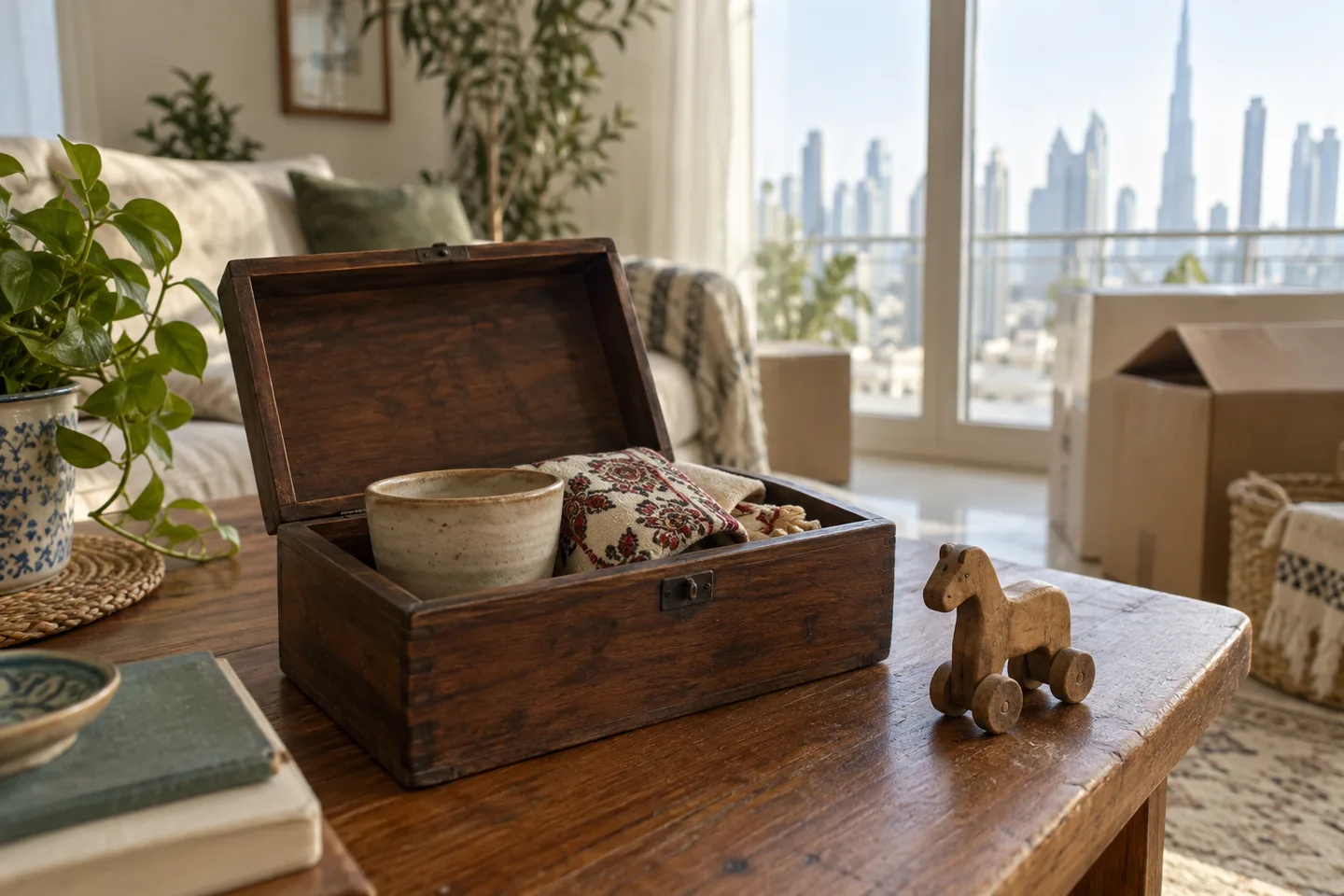
Dealing with sentimental items during clearance is easier to organise when those belongings have a separate decision and a separate physical place. A removal deadline does not decide their meaning or who should receive them. Before arranging house clearance, pull keepsakes out of the collection list so that memories, family choices and loading instructions do not become one hurried conversation.
Dealing with sentimental items starts with what matters about them
Ask what you want to retain: the object itself, the story connected to it, its everyday use or a combination of these. A handmade bowl may still belong on the breakfast table. A large piece of furniture may matter because of an event or a person even though there is no suitable space for it in the next home.
That distinction creates options without dictating a decision. Keeping the object, offering it to someone who wants it, documenting it or leaving the question open are different choices. A photograph is useful only if the person making the decision is satisfied with a photograph; it is not a universal replacement for a possession.
For ordinary belongings whose future use is the main question, the guide to what to keep and what to clear provides a separate method. Keepsakes deserve their own pass through the home so they do not have to satisfy a usefulness test that misses why they matter.
Gather a small group before making decisions
Start with a manageable group, such as items from one drawer or one display shelf. Keep related pieces together long enough to understand them. A cup without its accompanying saucer, or a small handmade object separated from the note explaining it, can look less significant than it really is.
Do not empty every cupboard into a single pile. That removes the context that helps you recognise objects and creates another sorting task before the original one is finished. Finish recording and placing one group before opening the next.
Use a retained box or cupboard that will remain outside the clearance. Choose a location that does not block the working route. In an occupied apartment in Business Bay, a cupboard in a retained room is more useful than a box in the corridor where other contents are being gathered to leave.
Record the story while someone can still explain it
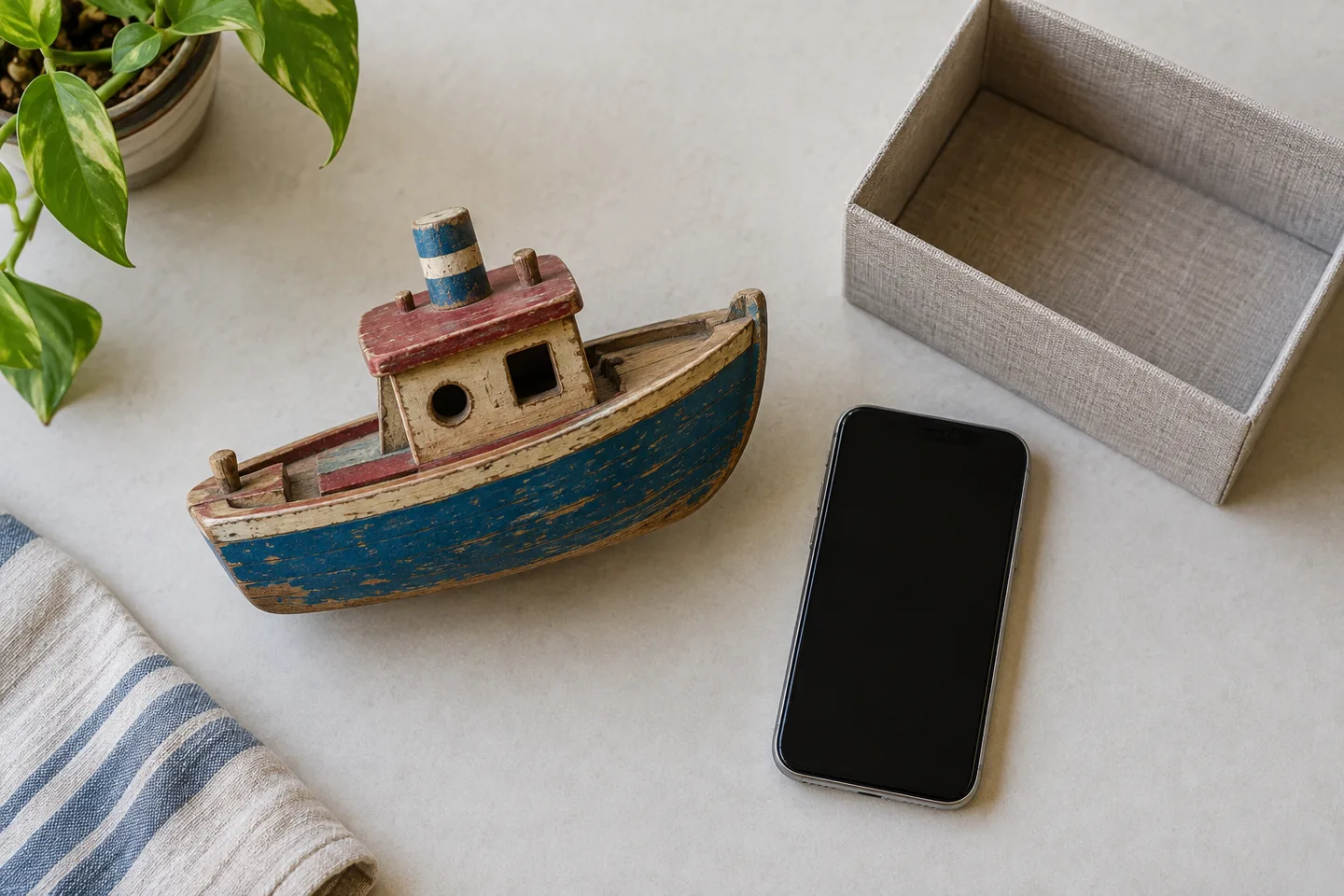
A useful record identifies both the object and why someone wants to remember it. Take a clear photograph of the whole piece and, if relevant, a detail that distinguishes it. Add the story separately in words or a short voice recording, using only information the person is comfortable retaining.
- Identify the object in ordinary words that another family member will understand.
- Record who supplied the story and any uncertainty about dates or names.
- Note whether the physical item is being kept, offered to someone or left undecided.
- Save the record somewhere the intended keeper can actually access.
Check the result before the object leaves. Open the photograph, play the recording and make sure the file is not available only on a device that is also being cleared. Avoid including documents, addresses or other private details in a family photograph when they are unnecessary to the record.
Make a family offer specific
Offer a named object to a named person with a photograph and its dimensions if size matters. Ask whether they want the item itself and how they would receive it. A warm reply about a memory is not necessarily an agreement to take a cabinet, a set of dishes or several boxes.
If someone accepts, arrange the practical handover before releasing the rest of the home. Record who will collect, where the item will wait and what happens if that collection cannot take place. Keep it outside the clearance load until the handover or another explicit decision has happened.
Do not put relatives’ names on belongings as a substitute for their agreement. That can turn a keepsake offer into an unwanted storage obligation. When nobody has accepted an item, return it to the owner’s decision list rather than describing it as already allocated.
Give undecided items a real place
An undecided item stays out of the removal instruction. Place it with the retained belongings and identify the person who will make the next decision. A date to revisit it can be useful, but the arrival of that date should not silently change the instruction to discard it.
Where several people have an interest in the same object, stop the physical handover until the people responsible have resolved the instruction. This article does not determine ownership or resolve family disputes. For the wider practical sequence after a death, see the guide to clearing a late relative’s home.
If the home must be handed back before the question is settled, make a separate arrangement for the object with an agreed keeper. Check the available space and transport rather than assuming someone can store it. The clearance team needs a clear leaving list, not responsibility for settling a family choice at the door.
What if the keepsake is too large for the next home?
First establish whether you want the complete object and whether it has a feasible place to go. Measure that place before promising to keep a large wardrobe or dining table. If keeping it whole is not practical, consider whether an agreed family handover or a record of the object would satisfy the people making the decision.
Do not ask a removal crew to cut out a decorative section or turn furniture into a smaller keepsake during collection. Alteration is a separate decision that may damage the object and needs an appropriate assessment. Keep the original item out of the agreed load while that option remains unresolved.
Finish with a keepsake handover, not just a cleared room
Before collection begins, check that retained keepsakes are with their agreed keeper or in the protected retained space. Tell the crew which space is excluded and make sure a helper has not moved its boxes into the outgoing group. The last check concerns where the objects physically are, not only what the list says.
A keepsake does not need to justify its place through price or usefulness. What matters for the clearance is a deliberate choice, a record if wanted and a handover that matches the instruction. Give meaningful belongings that separate treatment before the rest of the home begins to move.