You can organise a Dubai property clearance from abroad when access, authority and item-level instructions are settled before the crew arrives. The remote part needs its own plan: a current record of the home, someone locally responsible for agreed tasks, and a way to resolve exceptions without guessing. This guide covers that handover of information and decisions across distance, rather than assuming a video call can replace every on-site check.
Assign local jobs separately from permission to decide
Name who will open the property, show the crew the load and check the result. Then state which decisions that person may make without contacting you. Holding a key, arranging building access and authorising disposal are different responsibilities; one does not automatically imply the others.
The guide to being home for a collection covers ordinary attendance options. A clearance managed from another country also needs instructions that remain usable if you are asleep, travelling or unavailable when a question arises. Give your local representative boundaries they can follow without having to infer your wishes.
- Access contact: can arrange entry and the agreed building or community arrangements.
- On-site representative: can identify the listed items and record the result.
- Decision-maker: can approve changes within clearly stated limits.
- Handover contact: can receive keys or coordinate the next property appointment.
One person may fill several roles, but confirm that they have agreed to do so. Avoid treating an agent, friend or building employee as responsible for tasks they were never asked to undertake. Provide the same role list to the collector so operational questions go to the right person.
Establish what is in the home now
Ask for a current room-by-room record before approving the load. Use consistent room names and photographs from each doorway, then closer views of the relevant furniture and storage. An old property listing or a photo taken before the last occupant left cannot establish the current collection scope.
Have an authorised person check drawers, cupboards and cartons whose contents affect the decision. A camera can show an open shelf but cannot establish what is inside a closed bag. Mark uninspected spaces as uninspected instead of treating the absence of a photograph as confirmation that nothing remains.
Keep personal documents and sensitive information out of photographs sent merely for quoting. Where an item needs a private ownership or contents review, arrange that separately with the appropriate person. The collection team needs an accurate description of the load, not copies of every paper in the home.
Use one approved list for the whole job
Give items clear identifiers tied to their room and photograph, such as “bedroom two, chest beside the window”. Record whether each identified group is approved for removal, retained or awaiting a decision. The same identifier should appear in questions, instructions and completion notes.
Put a date or revision number on the approved list and make later changes explicit. A message saying “keep that one” is difficult to interpret after the accompanying photograph has been separated from the conversation. Repeat the item identifier and the changed instruction, then make sure the local representative and collector both receive the current version.
Settle entitlement to instruct the work before using this system. The landlord clearance guide addresses left-behind possessions, while the estate clearance guide explains why authority and family review come first. A detailed remote list does not resolve an ownership dispute or replace appropriate advice.
Plan for periods when you cannot answer
Confirm the collection window in Dubai time and note the corresponding time where you will be. Agree when you can answer questions and what the representative should do outside that period. Do not let a booking rely on an informal promise to be online if travel or work makes that uncertain.
- Approve routine actions against the written list before the visit.
- Identify the kinds of changes that require your direct answer.
- For an unexpected or uncertain item, agree to hold it unless an authorised decision is available.
- Ask for one clear message containing the item identifier, photograph and question.
- Record the answer in the shared instructions before the item joins the load.
If you cannot be reached, follow the agreed limit rather than treating silence as approval. The result may be a partial clearance with specific items left pending. That is a clearer outcome than a supposedly complete job achieved by making personal decisions on your behalf.
Confirm access with the people who control it
Have the local contact verify entry to the unit itself as well as the collection route. For a Business Bay apartment, that includes the building’s actual lift and loading arrangements for the booked visit. A building booking and a working key to the apartment solve different parts of access.
Confirm who receives any keys or access items afterward and how that transfer will be acknowledged. Share access details only with the people who need them for the agreed job. Do not put codes or personal documents into a general photo folder circulated to everyone quoting for the clearance.
Send the current scope and access information together when confirming the clearance quotation. State who can approve an added task or a revised price, and ask how an exception will be handled if that person is unavailable. This keeps an unexpected item from becoming an unrecorded change to the booking.
Ask for completion evidence that matches the original record
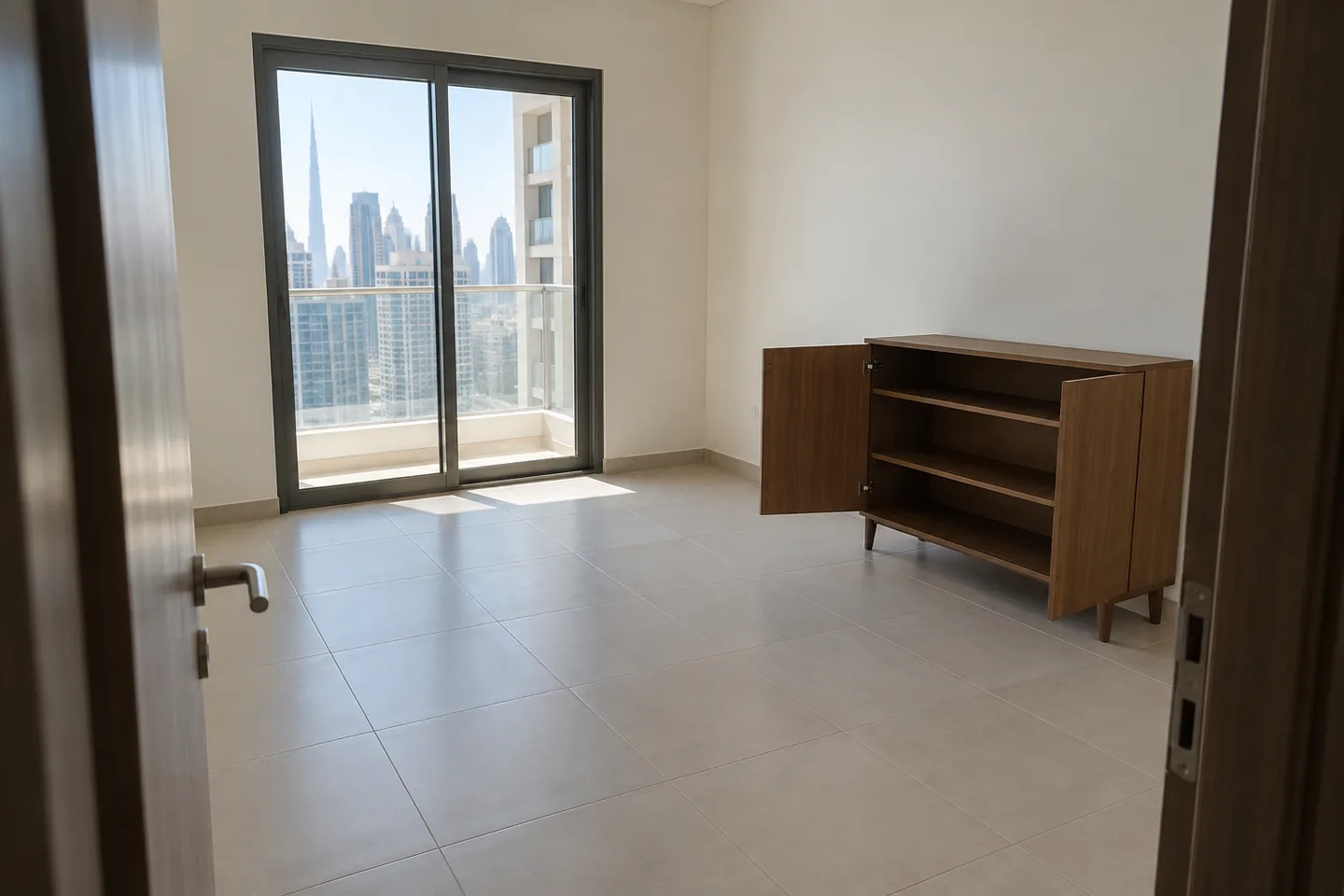
Request photographs from the same room positions used before the visit, plus views of the agreed storage spaces. Include retained furniture and any excluded areas in the record. A single photograph of an empty living room cannot confirm that a balcony, store room or bedroom cupboard was addressed.
Ask the representative to reconcile the approved list against what actually happened. Record items collected, retained items checked and exceptions still pending, with a brief reason for each exception. Complete this check while there is still someone at the property who can clarify a missing photograph or an ambiguous result.
Keep clearance completion separate from final property handover. Cleaning, maintenance, inspection and key return may involve other people and additional requirements. From abroad, the useful endpoint is a documented clearance result followed by an explicitly arranged handover, not an assumption that an empty-looking room means every task is finished.