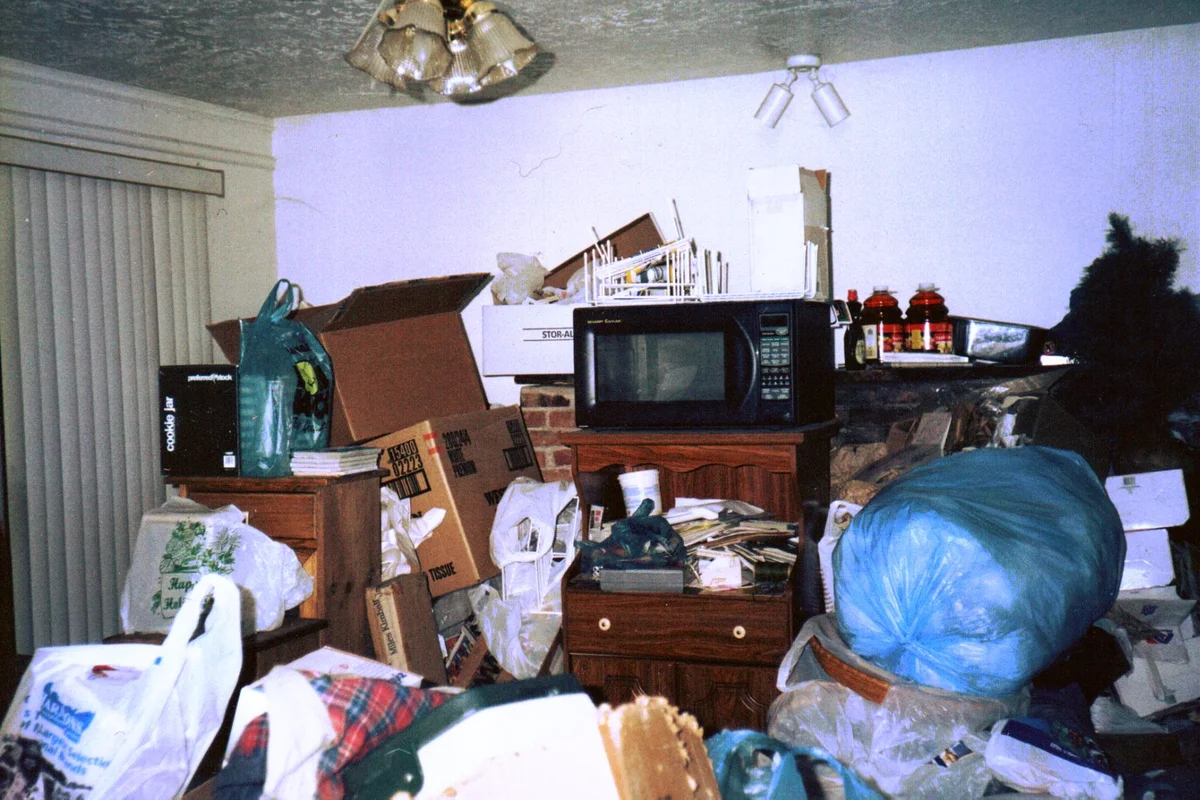
A home that has filled up over years, what most people searching for help call a hoarder house, presents a different job from a large ordinary clearance, and the difference is not the amount. It is that nobody can walk through the property, nobody knows what is in it, and the volume cannot be estimated from the door. This page is about the property and the logistics of emptying it. It is not about why a home fills up, and it offers no advice on that. If the person who lives there still lives there, they and the people close to them decide what happens, and the clearance follows that decision. What follows is how the work is estimated, staffed and sequenced once the decision has been made.
What makes a filled home different from a large one
A big villa clearance has a lot of furniture in rooms you can stand in. A filled home has three problems that a big villa does not.
- There is no route. Corridors, doorways and often the space in front of windows and air-conditioning units are blocked. Before anything can be carried out, a path has to be made, and making the path is itself part of the clearance.
- The contents are unknown and mixed. Documents, cash, keys and photographs sit in the same layers as packaging, newspapers, spoiled food and broken items. Nothing can be treated as waste until it has been looked at, which changes the speed of the work completely.
- The volume cannot be seen. What looks like one room of material from the doorway can be two truckloads once it is pulled apart, because piled material is compressed and a cleared floor reveals what was underneath.
The consequence of all three is that the job is not measured in truckloads until the first layer is out. It is measured in rooms and in days, and it is quoted that way.
Estimating a home nobody can walk through
An ordinary clearance is quoted from photographs of each room. A filled home cannot be photographed room by room because the rooms cannot be entered, so the estimate has to work differently. Photographs from each doorway, showing how high the material reaches on the walls, are the most useful thing a family can send. A rough count of rooms affected, and an honest description of whether the material is mostly bagged, mostly boxed or mostly loose, does the rest.
What a good company gives back is a plan for the first day rather than a fixed total for the whole job. The first day opens the property and clears the entrance and corridor, and at the end of it the crew can see enough to estimate the rest properly. Anyone who quotes a single fixed price for a filled home from a doorway photograph is guessing, and the guess is usually wrong in one direction or the other.
Loose material is the slowest to clear and the hardest to estimate, because every handful has to be looked at. Bagged and boxed material moves faster, but it is heavier than it looks and it hides what is underneath. Either way, expect the estimate to be revised after the first layer, and treat that revision as the job becoming visible rather than as the price moving.
Clearing by the layer, not by the room
A crew does not clear a filled home one finished room at a time. It clears in layers, working from the door inwards, and the sequence matters more than the pace.
- Open the entrance. The area inside the front door is cleared first so that bags and boxes have somewhere to be staged and carried from.
- Make a path to the air conditioning and a window. In a Dubai home that has been closed up, getting air moving is the first thing that makes the rest of the day workable.
- Clear the corridor to each room. Nothing inside a room can leave until the route from that room to the door is open.
- Set up a sorting point near the door: one place where a family member or the crew lead looks at anything doubtful before it goes into a bag.
- Work each room from the top of the pile down and from the doorway inwards, sorting into three streams: kept, set aside for the family to decide, and cleared.
- Clear the floor completely before calling a room done, because the floor is where the next surprises are.
The three streams are decided by category before the day rather than item by item at the door. A family that has agreed in advance that newspapers, packaging and anything spoiled leave without discussion, and that documents, photographs and anything with a name on it are set aside without discussion, has taken most of the decisions out of the room. The person living there should not be asked to rule on every object as it passes.
What turns up, and what the crew does with it
The same things turn up in almost every filled home, and a crew that has done the work before plans for them.
- Documents, cash, cards, keys and photographs, usually scattered through several rooms and inside other things. These go into one marked container that the family takes, not into any bag that leaves.
- Newspapers, magazines, mail and packaging, which are the bulk of the weight in many homes and are cleared without sorting once the family has agreed that.
- Food, both packaged and spoiled, which is bagged separately and taken out early because it is the source of most of the smell and most of the pests.
- Clothing and textiles in large quantities, often clean and usable, which can be separated for donation if the family wants that and there is time.
- Broken appliances, furniture buried under material, and glass, which are handled as they are reached rather than left for the end.
- Water damage, staining and signs of pests underneath the piles, which the crew reports rather than deals with.
Anything personal is set aside, not thrown. This is the one rule that never bends on a filled-home clearance, and it is the reason the work is slower than an ordinary clear-out. A crew that is told to move fast and not look is a crew that will eventually bag something that mattered.
Safety and handling inside a filled home
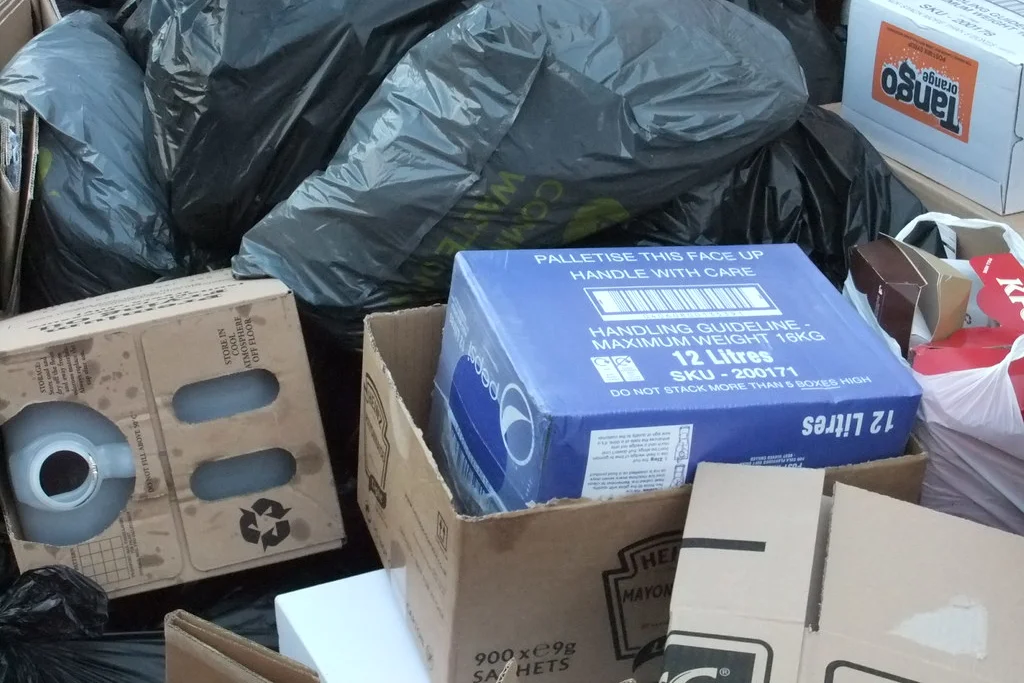
The hazards in a filled home are mostly ordinary ones in unusual density: broken glass under paper, sharp edges on buried items, spoiled food, dust, and piles that shift when the layer beneath them is pulled. Crews work in gloves and masks, bag sharps separately, and lift from the top of a pile rather than pulling from the bottom. Sockets and cables buried under material are treated as live until they are seen.
Heat is the local complication. A home that has been closed up in a Dubai summer with the air conditioning off or blocked is far harder to work in than the same home in January, and smell and pests are both worse. Start early in the day, get air moving before anything else, and expect the crew to work in shorter rotations than on an ordinary job. A filled home is cleared safely by going steadily, not by going fast.
Discretion in a tower and in a villa community
Most families care a great deal that the neighbours do not know what is being cleared, and a good crew treats that as part of the job rather than as a favour. In an apartment building, that means plain bags rather than transparent ones, loading inside a booked service lift slot rather than through the passenger lift, and never staging material in the shared corridor or the lobby. The building's security will see the volume going out, because they see everything, but volume on its own tells them nothing.
It also means the corridor outside the unit is kept clear and clean while the work is happening. The single fastest way to attract attention in a tower is a line of bags outside a door. Everything stays inside the unit until it goes down.
A villa is easier on discretion and harder on volume. The vehicle can stand at the door, but the garage, the garden, the shed and the maid's room are often as full as the house, and they are frequently forgotten in the estimate. Walk the outside of the property as well as the inside before the day, and tell the community gate to expect a removals vehicle if that is the local practice.
Who decides, and at what pace
If the person who lives in the home is present, they are the person the crew takes instruction from, and the pace is theirs. The family's role beforehand is to settle the categories so that the day is not a series of confrontations over individual objects. If the home is being cleared after the person has left, or on behalf of someone who cannot be present, one named family member instructs the crew and holds the set-aside container.
A crew clears what it is told to clear. It should not be put in the position of arguing with anyone about what stays, and a good crew lead will pause the work rather than do that. Expect the first day to be slower than anyone hopes and the last day to be faster than anyone expects, because the last layers are the ones that were always going to leave.
What finished looks like
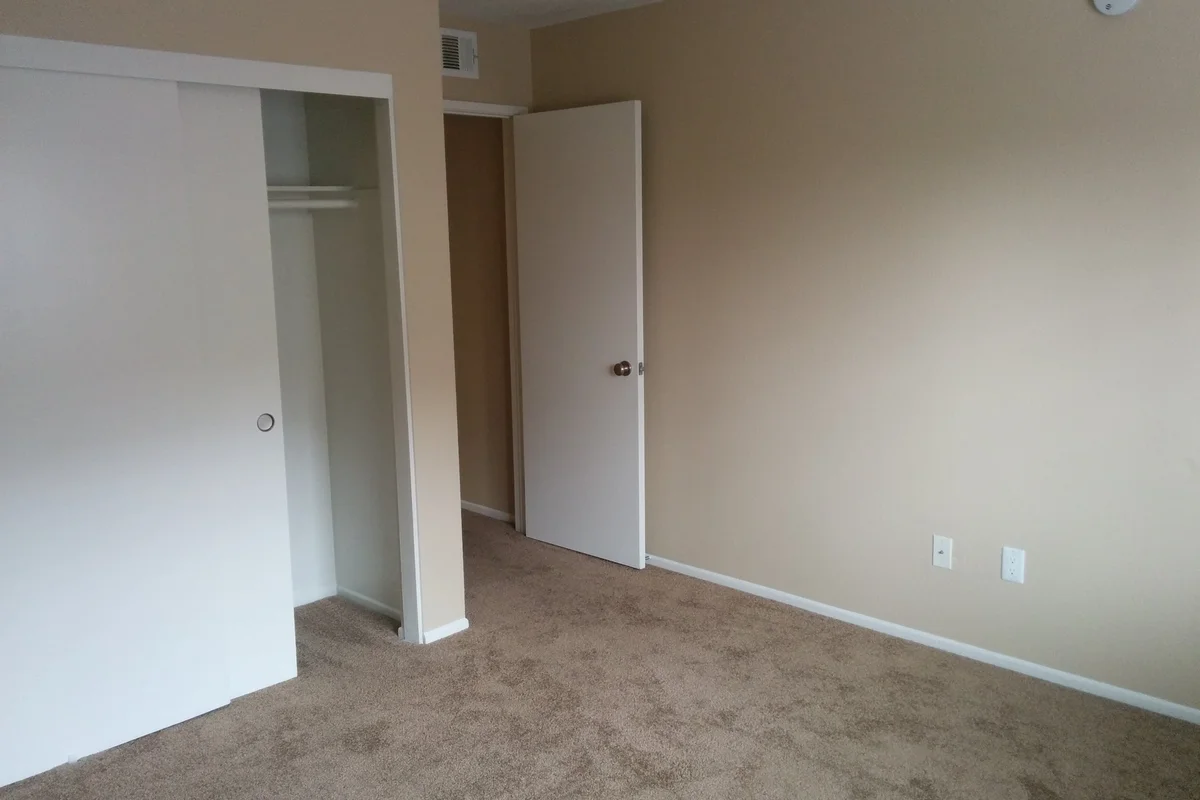
When the last layer is out, the property is broom-clean: floors swept, surfaces cleared, everything that was set aside handed over, and photographs of every empty room taken. What it is not is deep-cleaned. Under years of material there are usually stained floors, marked walls, sometimes damp and sometimes evidence of pests, and dealing with those is a separate job with its own trade. A clearance company can tell the family what it found. It should not be pretending to sanitise a home, and a family should be cautious of anyone who says a clear-out and a cleaning are the same visit.
Whether the home is being lived in again, handed back to a landlord or prepared for sale, that next stage is planned after the clearance, once the walls and floors can actually be seen. Trying to book it beforehand means guessing at a property nobody has stood in yet.
A filled home is cleared by the layer, quoted in stages, and run for care and discretion rather than speed. The path comes first, the air second, the sorting point third, and anything personal is set aside without exception. Agree the categories before the day, name the one person who instructs the crew, and let the estimate become accurate as the property becomes visible. It is slower than an ordinary clearance for good reasons, and it ends in the same place: empty rooms, and a family that knows nothing that mattered has gone.